 This is a translation version of the original video documentary which was than transcribed and translated from Bengali to English. A book with the title of History of Bangladeshis in Greater Manchester has been published and it will be distributed to the libraries, schools and universities. The interview took place on 1st July 2010, so information about his personal family information may have been changed.
 8.3.1 Life in Bangladesh:
Alhaj Mohammed Abdur Rashid was born in 1940 in the village of Syed Mandaruka, Balagonj, Sylhet, Bangladesh. He mentions that he remembers his primary school in Mandaruka and the times he had had there. During that time most people used to complete their study right after their primary education. He was studying at high school in class 6 before he had come to Britain.
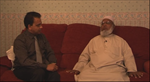
Alhaj Md Abdur Rashid
His father used to work onboard a ship; he cannot recall when his father started work due to his young age. During the 1940’s and late 1960’s some people travelled to Calcutta to gain employment by working onboard ships. His father had no intention on travelling to Britain and living there. During this period many people from India and Pakistan travelled to Britain to live and his father made the decision to settle in Britain.
8.3.2 Journey to the UK & Immigration:
When Rashid came to Britain at that time his father was already living in Britain, In 1958 Md. Rashid came to Britain with a work permit, he found out from his friends in that there were some opportunities for working in Britain as a work permit holder. At that time a visa was not required to come to Britain but permission was required from the relevant authority.
During that time Bangladesh was under Pakistan government rule. He flew from Dhaka to Karachi and arrived at Heathrow airport in London. He travelled with two of his friends to Britain; prior to their arrival they contacted relatives to meet them at the airport but unfortunately due to poor communication they did not receive the message and were unable to meet them at the airport. The people from Bangladesh came to Britain to work and earn money, he followed in their footsteps.
The main communication was written letters but a telegraph was used in emergencies. From Heathrow airport Mr. Rashid travelled by taxi to Birmingham to his father’s house and he stayed there for 6 -7 weeks.
8.3.3 Life in the UK:
They used to go to the public bath every week to have bath, there wasn’t any Mosque facilities either. There was a grocery shop in Manchester; Maulana was the owner of the shop. Everyone had known this butcher, Mr. Matin Miah from Bangladeshi used to own an Orient Restaurant in Manchester. There was a grocery shop next to the restaurant which they used to buy spices, rice and other things from.
In 1958 when he first came to Hyde his uncle Haji Wahab Ullah had mentioned that he was the first Bangladeshi man in Hyde. He used to live on 86 Victoria Street and used to work in a Cotton factory. He also said that Late Mr. Jomsher Ali, his brother Mr. Yaor Bakth Chowdhury, Mr. Abu Tahir, Mr. Shuna Miah, Mr. Gulam Kibria and his cousins’ brother were amongst the first Bangladeshi settlers in Hyde. They all used to live in one house and work in the cotton mill. At that time people who were single used to live in one house. If it was a big house then 10-15 people would live in that house and they used to cook their foods by themselves.
Mr. Ahsan Ullah from Jogonnatpur Sylhet, Bangladesh used to own the “Dhaka Restaurant” and he was the first Bangladeshi restaurant owner in Hyde. There was another restaurant in the same place called “Kashmir Restaurant” and Mr. Hason Ullah was the owner of the restaurant. The first grocery shop was owned by Late Mr. Hason Khan from Sikondpur, Sylhet, Bangladesh. That was a small shop and didn’t have a sign or a name; they used to pray on top of the shop. It was on Union Street. People used to known it as the Bangladeshi shop. Before the Mosque was established people used to pray at the shop.
During the work in the factory he used to get an hour lunch break. There were not any facilities to pray at work, so after work he used to pray at home. The main reason that would stop them from praying at work was the lack of facilities to do Wodhu. At that time everyone used to pray at home because there were not any Mosques nearby.
They used to get weekend off from work, on the weekends they used to do cooking, going out, and some even used to go to the English cinema hall. Some people used to go to Manchester to watch Indian Hindi movies, 2-3 people used to go together. Also they used to go to friends and relatives houses.
During the holiday period, they used to go to different towns to visit friends and relatives. From 1981 all the prices started increasing. Before that everything was very cheap, including the rent for the houses. He also said during 1960-1980 everything was very positive, a happier time even.
8.3.4 Employment:
During his stay with his father he looked for employment but at that time there was a job crisis in Britain. He had written to his relatives living in London and met up with them to discuss about finding a job. From what his relatives had told him he realized that it is hard to get a job. He tried for about 5-6 weeks to get a job but unfortunately there were no jobs available for him.
During these times there were no telephones available in most houses. His father sent him a letter asking if he’d found a job yet, he replied “at the moment, there is a really bad job crisis in London”. In 1957-1958 there was a terrible job crisis. At that time his father wrote a letter to his brother regarding a job for his son.
His uncle replied back to his Father confirming that he had found a job in Hyde and that his son needed to go there to get the job. Mr. Rashid’s father went to London and then came to Birmingham with his son. After that day he came to his brother’s house in Hyde with his son. Mr. Rashid’s uncle found him his first job in Britain.
His first job was in the Ashton Manchester Cotton Mill; his starting wages were 6 pound per week. He worked there for 6 months as a trainee labourer, although he did not have any experience he slowly learnt the necessary skills in order to work in the factory. It was difficult for him because without any previous experience from UK or Bangladesh as working in a mill, he soon started as a spinner. In that factory they used to make thread and export them to other countries.
In 1959, Britain started to take more and more people for jobs, every factory had a job vacancy. He started a new job in a rubber factory with good wages; he used to make gloves from plastic. His wages were 15 pounds per week, after 15 months he went to Bangladesh for a holiday.
He stayed in Bangladesh for 9 months and then came back to Britain, as he returned he started a new job in the Godley area in Hyde, they would make pies, sausages and other things. His wages were 60 pound per week. He worked there for 2 years then he returned to Bangladesh. At that time, the people did not stay in Britain for a long time. After 1 or 2 years they used to go back to Bangladesh.
After that he again returned from Bangladesh and had found another job in the Ashton Brothers cotton factory. After that he worked in a factory in Hyde where they used to make clothes. He worked there for a long time and that was his last job in Britain. In 1979 he started a restaurant business in Liverpool. He stayed with the restaurant for 2 years; it was also a partnership business with 4 other people.
The businesses’ name was Sher -E- Punjab Indian food shop. It was a good business, He then decided to leave the business due to his partners being gamblers and putting the business at risk, also he wanted to return to Bangladesh. In 1980 he stayed in Bangladesh for 6 months, he then came back to Britain with his family, he found out from the staff that the restaurant business was not doing good and that his partners had spent the money on gambling.
He asked his partners to provide the business accounts but they did not give back a good answer. His partners had left all the gas, electricity and tax bills unpaid which had added up to around 40-50 thousand pounds worth of debt, they initially bought the business and paid 40 thousand pounds. He had to make a hard decision, with 40 – 50 thousand worth of debts; he had taken over the control of this business.
Then in 1981 he had taken a decision to sell the business. After paying all the outstanding bills and taxes, he received only 3 thousand pounds by the end of it. His business was in a really bad situation and he had lost one free hold house. During 1981 he wasn’t involved with any jobs or businesses due to his pension age.
8.3.5 Housing:
During that time he used to live with his uncle at his house in Hyde, he did not have to pay any rent but he used to pay 50 pence every week for the food. During that time everything was cheap, i.e. 45 kg rice was 50 pence, now the same rice is £50.00.
Throughout that time there weren’t many telephones compared to this day and age where every family either has a telephone or a mobile phone. They used to contact each other by writing letters to one another. They didn’t have a television or a carpet in the houses which is very shocking to this generation. They used to use Coal to warm the house, those times in Britain the weather conditions were very bad, there was no difference between day and night, and it was always cold.
The weather condition was really bad, it was too foggy, snowy and during the day time it would be cloudy. In these times he used to socialize and spend time with other people in the living room, when they went out they had to wear big coats and gloves because of the cold. They didn’t have a bathroom inside the house either; they used to use the toilet outside of their house.
In 1960, he bought a 2 bedroom house for 600 hundred pound. At that time they didn’t have radiators or bathrooms inside the house, after 1970 they started to put radiators and bathrooms inside the houses. He sold the house and bought another 2 bedroom house for 1200 hundred pounds. Then the Council demolished the house. Then he bought another 3 bedroom house and he gave this house to his daughter and her husband as a gift. In 1990 he bought another house for 27 thousand pound and at the moment he is living in this house.
8.3.6 Social & Family:
Before his family came to Britain there were 10-15 families who used to live there, currently about 700 hundred families and more than 5 thousand people are living in Hyde. There is a Bangladeshi Welfare Association to provide help to the community. Since 1981 he was involved with the association and at this present time he is an executive member and member of Hyde Probin Mela Luncheon club.
This is how he involved himself with the community work. There was a housing association called “Shahjalal Housing Association” and he was a member of the association. At the moment Ashiana is in Rochdale had taken over the Shahjalal Housing Association.
Mr. Rashid claimed to be one of the first Bangladeshi settlers in Hyde amongst other people and there is lot of things that we can learn from him. At first, when he came to Britain he had problems with speaking English but slowly improved. He did not go to school or college to learn English; he learnt it from other English speaking people.
In 1964 he had gotten married in the Anorpur village in Bangladesh. He has 1 daughter and 2 sons. His sons are married, His mother and brothers are living in Bangladesh. After every 1 or 2 years he goes to Bangladesh to see his family and relatives. He really loves his country Bangladesh.
He was involved with the Mosque; in 1981 he used to go to Mosque to Pray in Hyde, Manchester. He became the Chairmen of the Mosque and he was involved with the Mosque for 10 years and he give thanks to Allah. They used to donate money for the Mosque on Fridays. Slowly the numbers of people had increased. They bought 2 houses for the Mosque and rebuilt it. After 1992 he became a Mosque Trusty.
In 1982 he went to Makkah to do his first pilgrimage (Hajj) then in 1992 he did his second Hajj. Mr. Rashid is an established person in Britain; in 1960 he had gotten British Citizenship. He is now retired and spends his time watching television, going to the library, Luncheon club, shopping and also goes to the Mosque and Pray. Sometimes he goes to relative’s houses or spends time with his family and grandchildren. During the rest of his life he wants to spend it in Bangladesh and in Britain.
8.3.7 Conclusion:
He has been living in Hyde for a long time; he also said that in that time he had spent in Britain everybody used to show respect, they were caring, supportive and helpful for each other. Slowly everything is changing unfortunately he mentions. He also said this is because everyone is either living in a different town or area or not going to each other’s houses and communicating with the family.
In the past, everyone used to live together and communicate with each other, they were caring, loving and helpful. The new generation needs to show respect, have a loving nature and be helpful towards the community; also they have to follow their own cultural route. He said Britain is a free country but the new generation has to follow the good way and have to respect their parents. They will do well in their personal, family and educated life. This is the important message to pass onto the new generation.