 This is a translation version of the original video documentary which was than transcribed and translated from Bengali to English. A book with the title of History of Bangladeshis in Greater Manchester has been published and it will be distributed to the libraries, schools and universities. The interview took place on 15 January 2008, so information about his personal family information may have been changed.
8.4 Alhaj Sunawar Ali
8.4.1 Life in Bangladesh:
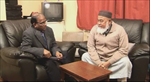 Alhaj Sunawar Ali was born in the village of Silaura, Jaganath Pur, Sunamgonj. His father’s name was late Mohammed Rashid Ali. When he was 5 to 6 years old his father passed away and in 1970 his mother died. Out of 4 brothers and two sisters, he is the only successor left of the family.
Before coming to Britain he was responsible to look after the land property. From the income of the property he was able to support his family. His family was well maintained and everyone lived peacefully. The poor and rich people in the village weren’t divided, everyone used to live together.
8.4.2. Journey to the UK & Immigration:
In 1942, his elder brother came to Britain. In May 1962, his elder brother obtained a ‘declaration’ for him, which allowed him to enter the UK. The flight expenses cost around 1800 to 2000 Rupees. His departure to the UK began from Dhaka Tejgaon Airport to Karachi. He had to stay in Karachi for three days due to some technical problems. He then flew to London Heathrow and then to Manchester Airport.
After arriving in the Manchester Airport, his elder brother came to receive him and then took him to his house. At the time Britain’s weather was very cold and he endured the cold British weather. Him and his brother travelled together to Britain and they stayed in there elder brother’s house. When he arrived in the UK he was only 25 – 26 years old.
8.4.3 Life in the UK:
His life in the UK was really heard at the beginning as he said there were no Bangladeshi families living in the UK. People used to cook their meals, washing their cloths and working hard either in the restaurants or factories.
8.4.4 Employment:
At first, he began work in a restaurant where he received £7.00 wages every week. He eventually worked in the Manchester Airport as a kitchen potter; the wages were £10.00 per week. Then he got a job in a paper mill in Manchester. When at work Mr Ali did not face much difficulties communicating with the workers.
He had to work for 9 hours from 8am till 5pm. The average weekly wages for this job was £10 to £12 as the pay was not fixed. Sometimes there was an opportunity to do overtime.
During that time the weather condition was extremely cold so he would wear two pairs of socks and warm insulated clothes when going to work as the workplace did not have heating facilities. He worked there for one and a half years before moving onto a cotton mill in Rochdale which was called Dunlop; he worked there for one year.
He then got job in another cotton mill in Hyde called Ashton Brothers. He used to work 12 hours shift and his weekly wages were £15.00 to £16.00. He went to Bangladesh in 1970 and returned to the UK in 1972 and he re-employed at Ashton Brothers. His weekly wages was £20.00 per week. The night shift was 10pm to 5am. He used to go to work by bus; he worked there for 10 years. The factory work was hard and boring, throughout his career he worked in several other factories due to competitive pay.
In 1978, he went to Makkah to pilgrimage and then went to Bangladesh. Upon his return to the UK, he found that the Ashton Brothers was closed down, where he used to work. He also said “At the end of the 1970’s factories in Britain were closing and people become unemployed”. After that he was not able to work much and the house he owned was demolished by the local council.
The behaviour of English people was very friendly. In the factories, the English people used to care for the foreigners. He said that if he had to go to Bangladesh, upon his return to the UK, it was possible to re-engage with the employment.
8.4.5 Housing:
At that time, while he was living with his brother, the houses did not have central heating and the houses had to be heated via coal fireplaces, there were only a few Halal shops where they bought their groceries. There were not sufficient mosques to pray in, during the occasion of Eid, Bengali people would have to pray in an Arabian mosque in Manchester.
He lived in Manchester for twelve years. Then in 1975 he moved to Hyde where he rented a house.
8.4.6 Social & Family:
He got married before he came to Britain. He had to leave his wife and his eight month year old son in Bangladesh. In 1976 he was able to bring his wife and children into the UK where they lived in a flat in Manchester. The children were enrolled into school but because of frequent visits to Bangladesh the children were unable to study properly. However one of his son’s was educated in a Madrashah (Islamic School) in the UK. The rest of his children are working.
8.4.7 Independence of Bangladesh:
At the moment of liberation, he was in Bangladesh. During the war he was a witness of the events that unfolded. During the stay in Bangladesh his passport was destroyed (bug). After that incident he received a new passport from British High Commission in Dhaka and flew back to UK.
Remembering the memory of liberation, he said that the anti-war group behaved very rudely and caused chaos. The members of this group are known as Rajakar and they worked against the liberation of Bangladesh and co-operated with the enemy. His home town was not affected during the liberation movement but Pakistani troops captured the local chairman Haris Miah and then later released him.
8.4.8 Conclusion:
In 1978 for the religious purpose he spent a few weeks to invite people for religious talks and then he went to Hajj. The savings was spent on maintaining the family and visiting Bangladesh, therefore he did not have enough money to invest in businesses back in Bangladesh. He is pleased that he has been able to raise his children well who have been able to pursue their own ambitions. Now he is enjoying his retirement life with his family in Britain.