 This is a translation version of the original video documentary which was than transcribed and translated from Bengali to English. A book with the title of History of Bangladeshis in Greater Manchester has been published and it will be distributed to the libraries, schools and universities. The interview took place on 30th July 2009, so information about his personal family information may have been changed.
8.11 Alhaj Tozomul Ali
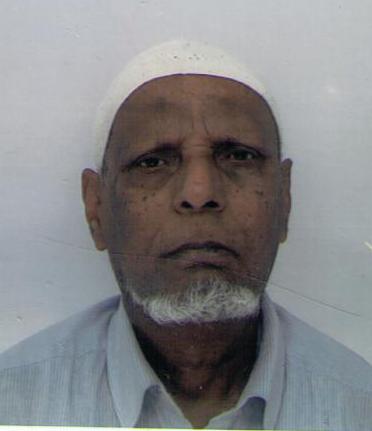 8.11.1 Life in Bangladesh:
Alhaj Tozomul Ali was born in 1939 in the village of Batipara, Bishwanath, Sylhet. His father’s name is Md Asod Ullah; he has two brothers and one sister. He completed his primary education from ‘Khagata Primary School’ and admitted to a local high school called ‘Ram Shundor High school’. He studied till class eight in the high school and after that he migrated to the UK. His father first used to work in a board ship’s as a crew.
After working for three or four years his father went back to Bangladesh with a one-way ticket. The financial status of the family was also good due to the earnings of his father. That time everyone lived friendly and peacefully and the elders were also highly respected and loved by all. He found those days really beautiful. Going to college, teaching the students, he found everything quite stunning. Today’s present is a bit different from the earlier time. The past we knew no longer exists. People’s feeling and attitudes toward each other is vanishing.
This way everyone was busy helping each other. He has added an example of living 9 different families in one boundary, if there was a one single issue and someone was in need of other people’s help, all of the family members from the neighbours used to come forward with the intention to provide you the necessary help and assistance you required. That was a very useful and easy way people had overcome with the problem.
Living together as family and maintaining the relationship with others was great, more specifically helping each other. There was no jealousy amongst any families within the society. Now the society is paralysed with frustration, one brother is not helping the other.
He said that people in the 1960’s were quite gentle, easy going and open minded. The curriculum in the school was very much related with real life. The method of teaching was very good and advanced. Teachers were very friendly and caring with delivering the curriculum. The students were affectionate towards the school teachers. There was no need to employ a house teacher after receiving good tuitions from the school. The students were able to do the homework on their own after receiving the tuitions from the school teachers.
The village economy was dominated by the agriculture, earnings from selling crops were sufficient to meet the general expenses of the families. There was good cultivation of three kinds of paddy; these are mainly Ayush, Amon and Buro. There was a good time to catch plenty of fishes from the small lakes.
He said in one winter his father went to Bangladesh and his father seen that there was a huge number of Koi, Shing and Magur fishes which had been retained in big pots. His father then advised other member of the family that at least for a week there is no need to go fishing, this was due to the smell of the fish which had become worse and there are plenty of live fish which had been reserved and would be enough for his family for quite some time.
He also said that during the fishing season, people used to eat enough fish and people used to get fed up by eating fish every day. During that season which lasted about three months, there was no need to go to the fish bazar to buy fishes. There was a big lake in his village. In the month of Boishak, there was a rainy reason, when the paddy field used to be flooded with rain water.
People used to catch different kind of small and big fishes from the paddy fields. The small fishes were very tasty to eat. It was like tail he felt. He also added there was a time that people used to say rice and fish is the main identity of Bangladesh, now you wouldn’t be able to find the fishes like you used get in the old days.
He felt sorry for not completing the secondary school certificate exam due to fact that he had to leave Bangladesh and come to Britain. He also added that the most enjoyable time was living in the village with the villagers; unfortunately this wasn’t going to come back in his life.
8.11.2 Journey to the UK & Immigration:
In the year 1963 he arrived in the UK. During that year people started to fill the forms to get the work permit. He approached two gentlemen, one of them was known as Sudir Takur who was his next door neighbour, other one known as Moboshir Khan who is now residing in Oldham. Both of them helped him fill in the application form and post it to the London address. Both of them told him that you will receive a reply from the UK and that he needs to contact them.
After about 6-7 months he received a reply from UK and it was advised that he can contact the British High Commission, he then had to complete the paper work. It was also known as “Voucher Form”. When he received the voucher from the British High Commission, he was finally confirmed that he was able to come to the UK. His father paid all the travel expenses. He flew from Dhaka by PIA and arrived at Gatwick Airport, his father came to Dhaka to give him see off.
From the Gatwick airport, he went to his nephew Kuddus Miah’s house. He was welcomed and offered good hospitality. On next day they arranged a ticket for him to come to Luton. At that time one of his cousins used to live in Luton and another cousin used to live in Accrington. He stayed one night with his cousin in Luton and come to Accrington by Bus. His cousin received him from the bus station.
8.11.3 Life in the UK:
There was heavy snow fallen during that time, most of the time they used to remove the snow/ice from their door step in order to open the door. The thickness of the snow/ice fallen was really high (10 inches to 18 inches). The people who are arriving now, if they seen this weather condition, then they would have said that there is no need to do the work in the UK and they would eventually go back to Bangladesh.
The bus was the main transport to go anywhere, but it was not adequate. The people used to wait 3-4 hours at the bus station. Waiting in the cold weather, the feet used to get cold. The people used to wear 2/3 sets of stockings and long boots to protect from the cold weather. It was a hard life in Britain, only the people who had been through the same experience as him would agree, he added. Two people used to sleep in a double bed, one person in single bed. If there was an extra guest then three people would sleep in the double bed.
On weekend they used to buy chickens and cooked them in big cooking pots. The price of a hen was 2 shillings 5 pence (1/2 crown). The prices of goods were very cheap. Usually on Saturday, he used to go to the public bath. There was long queue and people used to wait on the queue for 3 to 4 hours to get the serial. Half an hour maximum time was allowed to have time in the bath. The soap and towel was included with this price also.
There was language difficulties, when he first arrived in the UK, he was able to understand but was not able to speak. The English people used to show their affection to the Bangladeshi people, if there was any problem in finding an address they used to help them find the address, sometimes they used to drop them off at the destination address. They used to give money for the travel expenses – if anyone had no money.
Some people used to advice the new comers to keep their medical card, to show the address where they are living. For those people who were unable to speak the English, it was useful to keep the medical card in their pocket. The police were very helpful too. He never faced any discrimination just because of his race or nationality. The English men and women were very affectionate and caring too.
They used to do the shopping once a week, it was easy to split to cost between themselves. The English women used to bring the delivery to their doorstep; one person was responsible to pay the grocery bills. They did not like to eat meat; instead they used to get live chickens from the farm. They prepared to eat halal meat, which was the main reason why they did not buy the meat because that was not halal at that time.
Now days you get everything you need, for example fish, vegetable and pan (bettle nut was not available at the beginning). He said sometimes, when they felt that they want to eat fish than they used to buy herring or sardine fish from Market.
8.11.4 Employment:
He started to look for a job but it was very difficult to find a suitable job, during that time when he was approaching the factories, the gate keepers used to show signals using their hands that there is no vacancy. He was concerned about how he would support himself, to pay for the food and living cost. Considering that there is no vacancy he still made the effort to continue his job search in the factories.
One of uncles was intermediate passed, he taught him how to speak English, more specifically how to find the job. After so many days later finally he was able to find a job in the factory. This factory was known as “Brine Fabrics and Printers Limited” and it was a cotton factory, where he started his first job in the UK.
Designing and printing fabrics was the main job in this factory, he described that after printing, they used to put the fabrics into washing machines and it was dried in another room, his role was to dry the fabrics. There were about six rooms for drying the clothes. There were Bangladeshi workers and also there were British workers.
At that time there were about 100 – 150 Bangladeshi who used to work in this factory. There were facilities to do five times prayer within the factory. At the time when the prayer time is due, the management used to say to all the workers that all of the machines should be turned off and go to the prayer.
The workers were very obedient to the management. Usually the shift was for eight hours a day, but sometimes when it was needed to do overtime, everyone was bound to follow the instruction. The shift work was 8 hours to 12 hours but in the absence of another worker, the shift working time was doubled, i.e. 16 hours and there was no hesitation from the workers to do the overtime or double time.
He used to get £7.00 per week for working an 8 hour shift and if he had to work extra 4 hours overtime he used to get paid £12.00 – £13.00 per week. At that time people used to say his weekly earnings was good. The living cost was minimum compared to the current cost. To pay for a single bed to rent was only ten shilling.
After working 3-4 years working in the “Brine Fabrics and Printers Limited” he then moved to David Cotton Mill in Rawtenstall. There were three shift workers; amongst them a few of them rented a house. They used to share the cost of living and food. He shared an experience of living with three shift workers; they used to cook the meals in three different times.
They all lived in one house but they very hardly seen each other during working days. The weekend was their usual days off but sometimes, people used work Saturdays as well as overtime. They used to write notes to communicate with their roommates.
He worked in the David Cotton Mill in Rawtenstall for about five years. After that he moved to Brian Fabrics Limited in Oldham. This factory used to produce rubber frame for the glass. His weekly wages were £16.00 per week. After working five years in this factory he moved to another rubber factory in Hyde. He worked there for another five years than factory closed down. While he was working in the Oldham, he used to live with his uncle. When he moved to Hyde, he was able to find a house with the assistance from the company.
8.11.5 Social & Family:
In 1967 he went back to Bangladesh to see his close family members and got married. He stayed there for about six months. In 1982 he brought his family to Britain, when the British government passed a law for the commonwealth citizen to bring their family to the UK. (NB: Immigration & Nationality Act 1981). Before that there was no provision within the immigration Law to bring any families in the UK.
When the process was started many of them did not like to bring their families in the UK due to their personal choice. He did not have any intention of bringing his family but he realised that one day his children will say that he had the opportunity to bring his family in the UK but he did not do anything. Just for that reason he decided to bring his family. Many other people had done the same thing as he did at the beginning.
In 1970, when his father passed way, he travelled to Bangladesh for a second time. In 1981 he went to Bangladesh to do the paperwork for his family (application for entry clearance). In 1982 he brought his family (wife & children) with him and lived in the Hyde area. He took a two bedroom house and used to pay rent which was £15.00 – £20.00 per week. He was unemployed by then and was receiving benefits.
He was a father of seven children, four sons and three daughters. Eldest son is a qualified electrician, second son is working with NHS in the Diabetics section, his third son is a Hafiz (Memorised the Holy Quran) and his fourth son is studding at the University, his two daughters are married and the other daughter is studding at the University doing Masters Degree.
He is passing his retirement life by doing shopping’s, visiting friends and relatives. He goes to the Ashton-U-Lyne Jame Mosque on regular basis to perform his prayers. While he was living in Hyde, he was involved with Bangladesh Association and Hyde Jameh Mosque Committee but in Ashton-Under-Lyne he is not involved with any Community Organisation. After 2-3 years interval he goes to Bangladesh to see his close relatives. His eldest brother is living in Bangladesh. Sometimes, he takes his family with him. He taken his second son to Bangladesh and arranged marriage from there, it has proven that he has got the patriotism for the country where he was born and maintaining the connections.
8.11.6 Housing:
He used to live with a group of five people during his time in the mills; everyone was responsible to bear the cost of food equally. The toilet was in the back yard, now days that is impossible to believe. It was very cold weather; he used to feel very cold whilst using the toilet outside. There was no carpet inside the house either but people used to use the lining instead. There was no central heating but there was a fire place inside the house, the coal was used to warm up the room but it was not sufficient to warm up all of the rooms. Five to ten people used to sit in front of the fire place at once, the front side of the body used to get warm enough but the back side was always cold.
In 1987 he came to Ashton-Under-Lyne to live. The house is owned by the West Pennine Housing Association. He had to apply to the housing association prior to get this offer. As soon as he received the offer, he accepted and moved there. Now he is paying £92.00 per week towards rent. He tried to buy the house but the housing Association was not selling the house, if the Housing Association ever decided to sell the house in the future, they will be able to buy it.
8.11.7 Conclusion:
In the year 1970, he became British citizen. His primary intention was come to Britain to earn some money and support his family who were living in Bangladesh. He never thought that he will consider bringing his family to the UK. Bangladesh was in his mind, he was patriotic person.
There was a good time, when all man used to live in a house. There was a better relationship but now everything has gone. The people became so selfish since they brought their families to the UK. During the employment period he used to help 10-15 people with writing letters to their love ones. At that time main dominated communication method was writing letters and sends it by post. Those people, who were not educated, used to come to people who had some education to write letters on their behalf. They used to provide a voluntary service to those people. Now the telephones and mobile phones have become an easiest way to communicate.
He considered himself as a successful one as he worked hard in establishing his family in the UK. Finally, he said to the people who are engaged themselves in community or voluntary work, that they should work without looking for the position in the organisation with personal interest. In 1985 he performs his Hajj (Pilgrimage to Makkah). He has taken his wife and a son; he did the hajj for a second time. It shows that he is very obedient to his creator (Allah) and wealth is nothing to him.
He also felt that there is no one in his neighbourhood with similar age, where he can pass his retirement life by chatting with these people. But there was a time, when he had many friends at his work place. Sometimes he thinks to go to Bangladesh to pass his retirement life, but he is unable to do so, due to his family and children living in the UK. If there is a facility provided for the elderly people then he would have go there and pass some time.