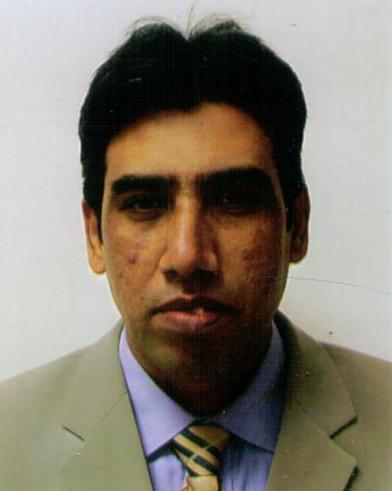
 This is a translation version of the original video documentary which was than transcribed and translated from Bengali to English. A book with the title of History of Bangladeshis in Greater Manchester has been published and it will be distributed to the libraries, schools and universities. The interview took place on 25 June 2010, so information about his personal family information may have been changed.
8.25 Mohammed Fozlu Miah
8.25.1 Life in Bangladesh:
Muhammed Fozlu Miah was born in the village of Projathpu, Haridorpur, in the area of Nabigonj Thana, Habigonj, Bangladesh. His father’s name is Muhammed Sharjan Miah. He completed his primary education from his local primary school called ‘Guplar Bazar Primary School’ and admitted at ‘Awsh Khandi High School’. Due to a certain occurrence, he had to stop his education while he was studying in class 7. His main reason would be lack of guardian’s care.
He regrets not attempting to get a higher education even with his travels to Britain. That time many people couldn’t afford to go for higher education even if they wanted to but he didn’t have any financial problems, he was from a rich background therefore he could have graduated if he wanted to. He says that not doing higher education was his bad luck.
His father was a business man and he owned a cloth store at his local area called ‘Guplar Bazar’. According to him there weren’t any financial problems in his family. The social condition of his village was also good. That time Hindu and Muslim lived together friendly and peacefully. And the relationships of one village with other villages were also strong.
8.25.2 Journey to the UK & Immigration:
During the Second World War, probably at 1942, his father left the business and started to work as a board ship’s crew. Due to this job, he was in Australia for a long time. After that when he was living in London, he was able to go Australia and come back to UK whenever he wanted. At the beginning of 1964 Fozlu Miah’s father settled down in Britain.
His father first brought him, his brother and mother to UK by family visa. His main reason for coming to the UK was merely his dream to travel by aeroplane for the first time and come to another country. When he arrived at Heathrow, he was glad to see his father after such a long time. This is the bond between a father and his son. He started living on Bridge Road in Uxbridge, where many other Bangladeshi’s also used to live.
8.25.3 Employment Business:
After coming to the UK, within 4 weeks time, he first started to work in an Engineering factory where his father was also working. He used to work 40 hours per week and his weekly wages were £30.00 at the beginning. He worked there for about a year.
After leaving the factory, he started to work at a restaurant. The restaurant belonged to his maternal uncle and was based in the M3 area of Britain. At first he found the job really hard but luckily since he was the nephew of the owner of the restaurant, he didn’t have to face really hard tasks, therefore he was quite happy with his job.
That time there was a problem with the Bangladeshi chef’s in the restaurants, it was that they weren’t able to read the bills as they didn’t know English. That’s why his main task was to translate the bills into Bangla, so the chef’s can understand the order.
The waiters were to read out the bills in Bangla to the chef and the other staff’s working in the kitchen was to follow the instructions given by the waiters. He made a deal with the chef of the restaurant that he’ll read out the bills for him and in return he will teach him how to cook.
They both agreed and within a short time he was able to learn how to do the cooking and within six months he moved to another restaurant with his work experience as a cook and the wages in that restaurant was higher than the one he was working at currently. He used to get a maximum of £45.00 per week in his uncle’s restaurant. Then his next job was at ‘Sylhet Town Restaurant’ where he worked for about 14 months and after that he was able to start a restaurant on his own.
In 1981, his uncle was one of the business partners of a restaurant known as “Bilash Restaurant” in ‘Leigh’, the other partner wanted to sell his share. He heard this news through his uncle and later bought the share of the restaurant for himself and became a business partner with his uncle.
He was quite happy with the business. That time he used to live in the residential flat of the restaurant. He was involved in this business till 1984. After that he started a tea house at Wigan, the profit in the business was higher than the previous one. His uncle who was also his business partner left the business and moved to London because his other brothers had also moved to London. He bought his uncle’s share.
He improved the restaurant a bit more and he was also getting more profit. Again he was involved with this business till 1988. After that he closed the restaurant for personal reasons and went back to Bangladesh.
After returning to the UK he again started the business of an Indian restaurant. In 1993 he opened a new restaurant in Manchester but he wasn’t making much profit so he left the business, But then again in 1997, he started another business in Wigan. It was also a high profile business. In the same time he bought another restaurant in the same area.
He was successful in managing both of the businesses. In 2003 due to some personal reasons, he had to sell both of the businesses. At present he isn’t involved with any business. He spends most of his spare times with his kids.
8.25.4 Social & Family:
He used to visit Oldham when he was living in Leigh. Then from 1989 after bringing his wife to UK, he started to live in Coppice. When he first came in Oldham there was only about 20-25 Bangladeshi’s, who helped open an institution for children to learn religious studies called ‘Shahjalal Moktob’ and he also with time became involved with helping the institution.
He tried to give as much time as he can for the improvement and benefits of the institution even though he had a business to take care of. In 1993 everyone in the community decided to build a new mosque because they felt uneasy in the Pakistani Mosque.
The elders in coppice also supported them and for their hard work they were able to buy two houses and convert them to a mosque. He tried his best to help out building the Mosque. The mosque was named ‘Shahjalal Mosque and Islamic Centre’ and is based on Stewart Street of Coppice and it consisted of 44 members.
At present due to extension and modification of the mosque now about 400 people can offer Salah but still it is sometimes over crowded. Another house is bought for further extension of the mosque so that more people can offer Salah. At present Many Bangladeshi’s live in Coppice and the number of houses Bangladesh’s dwelling would be around 1000. There are 209 house members of Shahjalal Mosque.
Besides offering Salah, many other religious events take place, for example Islamic Lectures, Arabic education classes for children 5 days a week, 2 hours per day. He also said that there was also a Bangla School which was held in Coppice Community Centre.
He isn’t sure but according to him the ‘Bangla School’ is closed now due to lack of funding. He also said there might be another reason, for example, there may be poor attendance of students or almost no students in the ‘Bangla School’ and therefore the school may be closed down.
For the elderly there is nowhere where they can go to pass their retirement time or participate in any activities. The only place the people can go is the Mosque. There is no place for the senior people to do exercise or to participate in leisure activities. He said considering this need, the community can do something about it.
There was a Bangladeshi Community Association in Coppice and its main organiser was Alhaj Jomir Ali who was the chairman of the ‘Bangladesh Society’ in Glodwick. It was based on 179 Leigh Street, and due to the hard working of the people the organisation administrated one community centre for about 3 years. Many people were beneficial because of this. Sometimes, the elders used to visit the centre and discuss how to arrange the marriage of their son or daughter.
It was really hard to find people from the Bangladeshi community who can fill up official forms. The centre was created to help people with such matters and to give them advice and discuss other important issues but the centre has been closed due to lack of funding.
He said that if everyone in the community works together, then they will be able to accomplish great things for the good of the society. He encourages people to work with the community or the benefit of the people.
The feelings for the community of people are breaking down day by day at these busy days of people in coppice, while it was really friendly and filled with love 15-20 years ago. The people in the Bangladeshi community are arguing with each other regarding their local culture. Everyone from local Sylhet district denies accepting this. Some are ‘Bishwanathi’, ‘Bianibazari’, ‘Nabigonji’, ‘Moulobibazari’, etc. This localism politics is letting the society down; because of this the community is behind the other minority communities.
He said “the Bangladeshi people in Coppice should work together as a team”. He also gave an example that: two mosques were built when there was less than a hundred Bangladeshi in coppice where the second mosque wasn’t really necessary considering the number of Muslims.
One Mosque was sufficient and the bond and friendly behaviour between people would have been good. Even though the Bangladeshi community is ahead in education grounds, it’s quite behind when compared with the neighbouring communities. He believes that if all the people in coppice work together, they can bring benefit to the community.
He says that although he doesn’t have any relatives in Bangladesh, he still loves and misses his birthplace. After coming to the UK he went to visit Bangladesh about 20 times. His last visit to Bangladesh was in April, 2010. He stays there for 2-3 months, sometimes 6 months. He didn’t go to any other country from Britain for holiday except Bangladesh but he did go to other countries for his personal reasons, not for holiday. Also he went to many places in Britain with his family for holiday, for example: seaside, etc.
At present he spends most of his spare time with his wife and his kids. Besides he also stays busy with a project called ‘Ashroy Kendro Nirman Prokolpo’ which is to help the orphan and handicap children. He also sometimes has to go Bangladesh for maintaining the project.
The project is based in his village ‘Projatpur’ in the area of Nabigonj, Habigonj. His father and his grandfather left some property for them. He and his mother donated some of this to help run the project. Within this project there will be a School, Madrashah Mosque, a Training Centre, Hostel, etc in a complex way for the orphan and handicap children.
The project will be run as a registered charity in Bangladesh and he also hopes that the charity will be registered in Britain as well. No one from his family is involved with this organisation, indeed it is run by a committee of 31 members and Mr A.K.M. Faruk, UP Chairman of his village is selected as the Chairperson for this project. The project was named in 2003 and it was named after his beloved son as-‘Ruman Welfare Trust’ which was registered in 2009.
8.25.5 Conclusion:
With his experience in the UK, he says that he was beneficial by coming to the UK. This was his destiny and the blessings of the Almighty Allah. He may have stayed in a better social condition as his father was in Britain, and there weren’t any financial problems and their family was also running well. Therefore he believes he may have been living a better life if he didn’t come to the UK.
At last he requests all the Bangladeshi people who are living in the UK and especially the ‘Sylhet’ people to forget about their arguments they were having regarding their local region and live together friendly in a different country. This will bring benefit to the society and its community. We should leave behind a peaceful and beautiful society for the new generation, for their good fortune and he asks to support him to become successful in his welfare trust project by praying for him and by wishing him luck.