
 This is a translation version of the original video documentary which was than transcribed and translated from Bengali to English. A book with the title of History of Bangladeshis in Greater Manchester has been published and it will be distributed to the libraries, schools and universities. The interview took place on 2 December 2007, so information about his personal family information may have been changed.
8.27 Alhaj Hafiz Ekhlasur Rahman Chowdhury
8.27.1 Life in Bangladesh: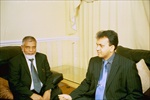
Alhaj Hafiz Ekhlasur Rahman was born in 1938 in the village of Chandborang in the area of Bishwanath, Sylhet. His father’s name was Shunahor Ali Chowdhury. His father died when he was 2 and half years old. His father was a farmer and he used to cultivate paddy. His father was able to maintain his family easily due to the income from the cultivation.
When he reached the age to study, one of his uncles (father’s cousin) guided him and he was able to become a “Quran-E- Hafiz” (memorized the holy Quran). His uncle’s family used to love him very much.
He became the Quran-E- Hafiz from the “Oliarpara Madrasha”. At that time, while he was learning Arabic he used to go to the primary school and he completed his primary education too.
The Madrashah (Islamic Institution) and Primary School was in Jagannathpur Thana but it was miles from his village. At that time, he stayed with a family. When he was only 15 years old he completed his Islamic qualification (Hafiz). When he became a qualified Hafiz he worked at the “Budrai Mosque” and performed the prayer during the month of Ramadan, also known as (Kotme Terabi) a complete recitation of the Quran through special prayer and he also did the same thing twice at “Shiramishi Mosque” and then he came to England.
8.27.2 Journey to the UK & Immigration:
In 1963 when he was only 20 years old, he came to England by voucher. From his own initiative, he collected the form to apply for the Voucher. One of his relatives, also given him some advice and told him that if he sends his completed form to British High Commission, Dhaka then they will process your application and send him the Voucher.
One of his relatives completed the form and sent it to the British High Commission, Dhaka. He received a reply from the Labour Ministry of Great Britain and it was mentioned that within 6 months time he would receive his Voucher from the British High Commission in Dhaka. Accordingly, he received the Voucher on time.
One of his nephews “Mujibur Rahman Chowdhury” helped him to obtain the Passport. He was a student of the “MC Collage” Sylhet. At that time, he did not inform anything to his family because everyone would think that a Hafiz of Madrashah should not go to England because in England there were no Mosques to pray in at that time. Soon after, he received his passport; he contacted the British High Commission and obtained the Voucher. Then he came back to his house, collected the money for his air expenses, and left the home.
He came by train to Dhaka and he brought his uncle along with him to get given guidance before he caught the flight. He flew from Dhaka by PIA airlines and he paid 1800.00 Rupees to come to England. His father-in-law paid the full amount, when he confirmed that all the necessary paper work has been sorted him is ready to go. Prior to coming to Britain, just about a year ago he got married to his cousin (uncle’s daughter), the uncle who guided him to do the study. He was then only 19 years old.
After he came to Heathrow his uncle’s son who is now his brother-in-law came to receive him from the airport and took him to Uxbridge, where he used to live. There were other people who used to live there too at that time. He had seen that the people who used to work at night would sleep during the daytime and vice versa and he also seen two people sharing the same bed.
Due to the lack of living space for him, after two days he decided to leave this place. So his brother-in-law took him to London to Abdul Mutlib Chowdhury’s “Dilshad Restaurant” who was his brother-in-law’s uncle. He was passing his time by living and eating there. His relative told him that he was a respected person, he done the “Hafizi”, so he should not be working in the restaurant. His uncle used to like him very much due his religious qualification. His relatives also told him that if he finds another kind of job then he would be able to do it but until then he should live there as a guest.
8.27.3 Life in the UK:
There was no telephone in most houses, so the main communication was to write letters to his loved ones to stay in touch with them. In the past the weather condition was very poor, it was very cold, now a day’s even some people cannot imagine.
8.27.4 Employment & Business:
His uncle proudly introduced him to other people and he used say to them “my nephew is a Quran-E-Hafiz”. After living there for three months, he left the restaurant and went to live with his uncle’s son in Haslingden. He did not find any jobs for himself after trying so; he went on benefits for the first time, he used to get 50p per week.
Then he used to get £1.00 or £2.00, he cannot remember exactly. He was unemployed for about 4 months, and then he finally got a job in a cotton mill in Haslingden. The name of the mill was “Smith Nephew & Co”. At the beginning he used get £3.50 every week as a trainee worker. He used to work there 7 and half hours. His job was to change the springs and rings in the factory machines.
After working there for a few days, his work pattern had been changed and he used to get £5.00 every week. He used to talk to English people by body language and it was going well, he didn’t have any problem at that point. Whilst working with the English people, he was able to grasps the technical English language. There were some Bangladeshis who were able to speak good English; he tried to learn some of English language from them. In this way, he was able to learn the essential English language.
Due to lack of bath facilities at the time, he was not able to perform the Salah and read Quran on a regular basis. He worked there for 10 years (1964 – 1974). His latest wages were £80.00 per week. While he was working in the factory, he sponsored his uncle’s son with a factory voucher and brought him to England. After a while, when he gained experience, he became a supervisor.
In 1974, he got a job in Mars Textiles Limited in Rochdale and his weekly wages were £90.00. He worked there until 1976. After that, he had another job in Rochdale but the wages were higher than before. He used to work from 7am until 5pm dayshift and the wages were £100.00 a week.
Whilst he was working in that factory he opened a grocery shop in Rochdale and it was known as “Surma Food Store” based on Entwisle Road. There were four partners and they paid £10,000.00 to set up this business, so each of them paid 2 and half thousand pounds. They used to sell fish, chicken, meat, Beatle nuts and many more grocery items.
He used to get the supplies from London and Birmingham. He used to take orders from local shops in Rochdale and the surrounding area and he used to do deliveries. Three partners used to work at the shop and they used to take £80.00 every week. After receiving the wages, they used to get £20.00 to £25.00 as profit from the business. They run this business until 1980.
After that he opened a partnership restaurant in Todmorden and the name of the restaurant was “Tajmohol Restaurant”. That was the first restaurant opened in Todmorden. The business was going very well and had a seating capacity of 40 people. In 1982, he opened another restaurant by himself and in 1983 he sold his share in the first partnership, and in 1985 he sold his second restaurant.
He didn’t like the idea of his eldest son getting involved with the business but he encouraged him to study. He retired for about 1 year at that time, his older son got into Leeds University, he moved from Rochdale to Leeds as his son requested him to move there. In 1987, he did not have any chance doing a job or business, so he moved back to Rochdale. In Rochdale he had a Fish & Chips shop and the shop was rented by a Chinese person. The lease had been expired and shop became empty, so he decided to live in the flat and buy a house later.
At that time, he was planning to go to London. He opened another grocery shop in Leeds and he spent £16,000.00 to open this shop, it was called “Evening News Shop”. He used to sell grocery items along with Manchester Evening News. He had run this business for two years.
8.27.5 Housing:
At that time, he used to live with some other people; he had to pay 10 shillings for the food and 10 Shillings for the accommodation. The toilet was outside the house, so he used to take the water with him, if he needs to use the toilet. He used to have a bath every Saturday in the public bath because he did not have the bath facility inside the house.
He used to take bread from home for his lunch. Even though he did not know English very much, he did not hesitate to mix with English people. He used to visit different factories for jobs; the people used tell him no vacancies with their hands. He said, “When I used to go pass any factories, then I used to say “I want a job” after learning some of the English language. He worked there for about 8 months.
Whilst he was working in Haslingden, he used to visit Rochdale frequently to meet some of his friends. When he first visited Rochdale, he came with one of his friends, and then he was able to visit on his own. Sometimes he visited Rochdale to make enquiries for a job because at that time, there were plenty of mills and factories in Rochdale. He used to get one day off from work and if someone missed a day, their wages used to be reduce by deduction of missed hours.
He managed to get a job in Heywood and the weekly wages were £10.00. His job was to work on the Dope Machine. The wages were good, so he moved to Rochdale. He used lived in a rented 2 bedroom house, 10 people shared the cost between them. The toilet was outside of the house and for hot water; he used to boil a kettle and had a bath once a week at the public bath.
8.27.6 Social & Family:
In 1972, he brought his wife, son and daughter into England. After that in Rochdale he bought a two bedroom house for £3000.00, and it had a bath and toilet.
In 1986, his son completed his graduation and got a job in the same University. He wanted to get his son married in Bangladesh, so in 8 November he bought a house for his son, he went to Bangladesh, and then he took his son to Bangladesh and got him married. In 1987, he returned to the UK. Whilst he was in Bangladesh he bought a house in Subidbazar, Sylhet area.
In 1987, he did not have any chance doing a job or business, so he moved back to Rochdale. Now he is father of 6 daughters and 2 sons. His eldest sons passed their degree and are now working in the UK, all the other children have been studying, and now they are busy with their own lives.
Since, 1979 he was involved with the Bangladesh Association in Rochdale. Bangladesh Association first started in 1973 at his premises above the grocery shop “Surma Food Store”. He was a member of the Association and then he became the treasurer and then the vice Chairman. He was involved with them from 1973 until 1977. Since 1997 till 2006 he was the Chairmen of “Jalaliya Jameh Mosque”.
8.27.7 Conclusion:
He went to Bangladesh several times with his family. He has two houses in Sylhet town and also owns some lands in Bangladesh.
His wishes and dreams have become true in England. All of his children have educated and are earning good salary. He feels proud for his children. The community in Rochdale is doing very well in education and business. At the present time, he is spending his retirement time with his family and likes to spend some time in Bangladesh but he is unable to do so, due to his ill health.