 This is a translation version of the original video documentary which was than transcribed and translated from Bengali to English. A book with the title of History of Bangladeshis in Greater Manchester has been published and it will be distributed to the libraries, schools and universities. The interview took place on 11 May 2008, so information about his personal family information may have been changed.
8.34 Alhaj Mohammed Wajib Ali 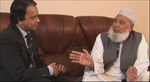 8.34.1 Life in Bangladesh: Alhaj Mohammed Wajib Ali was born in 1934 in the village of Chorchondi, Bishwanath, Sylhet, Bangladesh. His father’s name is Alhaj Mohammad Montaj Ali. His father died when he was 4 years old. He studied in “Habra Bazar Primary School”. High school was too far away, about 2 & half miles away from his house. It was based in Bishwanath. Due to the distance of the school and transport system not many students were able to do higher education.
At that time, it was a British colony [East Pakistan]. There weren’t many schools compared to this time. There were not many facilities for teachers. Primary school teachers used to get 12 Rupees for monthly wages. It was really hard to maintain a family with the wages. His childhood was really good.
That time things were very cheap, it was affordable to every families. The people were enjoying a very simple life style. There were affections amongst villagers but now days you will see the opposite. The overall social system was very good. He said “if there was a problem, local seniors used to come forward to resolve the problem”.
Everyone used to respect each other. On the Eid days, in the Eidgah and the Mosque, after the Salah, people used to embrace each other. Everyone used to invite each other to visit their houses and to have special food on these occasions. Everybody used to get holidays from their work. There were no business activities on this day, everything was closed.
8.34.2 Journey to the UK & Immigration:
The reason he wanted to come to the Britain was to establish himself. He wanted to come to Britain and save some money and then go back to Bangladesh. In 1963 he came to Britain and he was 33 years old. In 1961 he got married before he came to Britain. His eldest son was 12 days old before he came to Britain. There was another 2 people from his village who came to Britain with him. He arrived at London Heathrow Airport then he stayed 1 night in London. Then he went to his cousins’ brother’s house in Bradford.
8.34.3 Employment:
He got his first job in a Wool Mill. After a few days of working there he learnt how to use the machine. They used to make thread from wool. He used to get £10.50 per week. He worked there for 2 and half years. After that he came to Rochdale. There were more Bangladeshi people who used to live in Rochdale. From their help he found another job at the “March Mill”.
After working there for 2 weeks, he had the opportunity to work on the machine. His wages were £12.50 per week. After working there for 6 months, he went to Oldham and worked at the “Manor Mill”. He worked there for about 4 years. He used to get £26.00 per week. After that he went to Bangladesh in 1969. He stayed in Bangladesh for 4 years.
After the War he came to Britain. He found another job in Rochdale in a “Cotton Mill”. After working there for 6 months, he found another job at the “Turners Mill”. He worked there for about 7 years. In 1982, he retired from the job because of his ill health condition. That was his last job. When he was working at the factory, the factory in charge was responsible to give training to the new workers.
The colleagues, if they had the opportunity, then they used to help the new workers. He did not have any language difficulties whilst working with English and other people. The people who were able to understand language of foremen, they used to get the job. 80% of people used to use their body language to make them understand.
He used to take his lunch with him because they didn’t have any halal food in the canteen. All the white people were not English, to avoid any conflict; he used to work frankly with them. His family was in his mind, while working in the factory. On the weekend he used to go to the public bath to have shower and he had to pay for this.
There were time limits; 30 minutes maximum time was allowed to do the shower. On the weekend he used to socialize with friends and family. On Sunday he used to go Cinema to watch movies. Also he used to Write letters and send money to Bangladesh over the weekend.
8.34.4 Housing:
He used to stay with his cousins’ brother at his house and he used to pay rent, 50 pence per week. When he came to Rochdale he did not have a bath or toilet inside the house because at that time they used to have baths & toilets outside of their houses. It was very difficult to use the toilet at night. He bought a house to bring his wife and children. His eldest son sent money to him from America for the improvement work of the house. It was costs him about £5000.00 to buy furniture and to complete the work.
8.34.5 Social & Family:
In 1986 his wife and children came to Britain. He is the father of 3 sons and 2 daughters. His eldest son passed his BA when he was in Bangladesh then he went to America and stayed there for 7 years, then came to Britain.
At the moment his son is involved with a Business. His eldest daughter studied and she was working. After that she got married and she quit the job to look after her children. His youngest daughter got a degree and now she is working as a School Teacher. His youngest son is a Chemical Engineer.
He established his family in the UK and also he is very happy about his children’s education. At that time, there was a Mosque called “Jalalia Jameh Mosque” in Rochdale. He used to pray in that Mosque. After 2 and half years, with 102 Bangladeshi people opened a second new mosque called “Al Amin” and he is involved with this Mosque.
He went to Makkah to do pilgrimage. In his free time he prays, reads Quran, reads books, reads news paper and talks with friends. Sometimes he goes to town with a taxi. Also he talks to his relatives in Bangladesh over the phone. He is very happy with his family in Britain.
8.34.6 Independence of Bangladesh:
In 1969, he went to Bangladesh and stayed there for 4 years. He had seen the liberation movement and war when he was in Bangladesh. In the war people who are from Britain had to be very careful because they used to kill people who are from abroad, due to this he used to stay outside at night.
During the time of war, there was night guards, patrolling their village to make sure, no one can enter their village. He maintained good relationship with this people. He said “during the war period it was very difficult for people because anyone could be killed by the invading Military”.
8.34.7 Conclusion:
He said community members need to work together in order to develop the community even further. Without co-operation, the nation cannot succeed. He said “the people came to this world for a short period of time; everyone will have to leave this world”. He also said “to get a better life after death, he suggested to do payers in this world”.
He also said “we have to obey the rules and guidance from Allah and helping other people is the great prayer”. The people will be benefited in this world and hereafter.