 This is a translation version of the original video documentary which was than transcribed and translated from Bengali to English. A book with the title of History of Bangladeshis in Greater Manchester has been published and it will be distributed to the libraries, schools and universities. The interview took place on 29 June 2010, so information about his personal family information may have been changed.
8.35 Faruk Ali
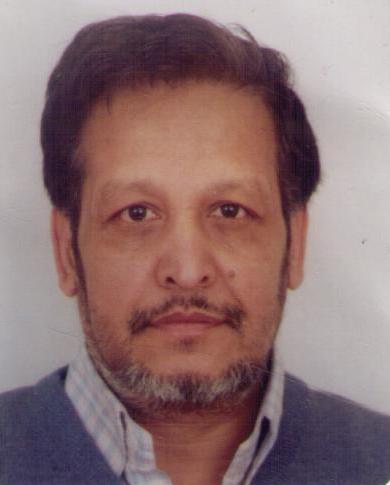
8.35.1 Life in Bangladesh: Mr. Faruk Ali was born in 1955 in the village of Nurpur, Fenchugonj, Sylhet. He is the third born out of four siblings (Two boys and two daughters). He has 14 years difference with his youngest sister which is really amazing. He completed primary education from the local “Fenchugonj Dorgapur Primary School”. Then he admitted in local Kasim Ali high school. After the class 7 exam he came to Britain.
8.35.2 Journey to the UK & Immigration:
In 1969 he came to Britain with his Mother, at that time he was 12 years old. That time his Father used to work in British Army. Mr. Ali used to work in Manchester in 1963 then he moved to Rochdale and started working at Dunlop.
8.35.3 Life in the UK:
After that he came to Britain and he admitted in “Bradfield Primary School”. In 1973 he has completed GCSE from “Green Hill Senior High School”. Then he did Textile Engineer course for 2 years from the college.
He has been living in Rochdale since he came to Britain. He also said that his father used to live in Rochdale, his children and his grand children also live in there. When he first came to Rochdale he did not like it because there were not many Bangladeshi people around that time. That time about 2/3 of Bangladeshi people used to live in Rochdale. His mother was one of the first Bengali female spouses in Rochdale.
That time 4 Bangladeshi children used to go to school 2 boys and 2 girls. In 1970 there were not any Bangladeshi boys who were same age as him, first he used to face problems with his English and he used to have English and European friends. He has been in Britain for over 40 years and he give thanks to his parents for their support for his Bangla language.
He came to Britain when he was very young and he used to have English friends but he still managed to speak Bangla to them. In 1970 Bangladeshi people started to come in Rochdale.
That time there was not many facilities compared to this time. He said Britain has changed, he also said about Rochdale that it is a lot different from what it used to be like. In 1970-1980 there was jobs you could apply for it but there answer was sorry no vacancies. He said that there was discrimination or they did not want to give out jobs to Asian people. He said between 1970 till 1980 it was a very hard time. They used to treat people the way they wanted and it wasn’t nice treatment.
In 1980 a lot of Bangladeshi families used to live in Rochdale, which were 200-300 hundred families and 4-5 thousand Bangladeshi living in Rochdale and contributing to Britain’s economics. He used to like that people from Bangladesh are living in Rochdale because he enjoyed seeing people who shared the same race around him and also he enjoyed helping the community with these people.
During that time they never used to give jobs to people who were Asian, when they used to apply for job they would say sorry no vacancies. He also said that he had the ability to get the job satisfactions, he was an intelligent man and had an education as did many of the Asian people living within Britain, but they’d still turn them away due to their race.
At the moment in Britain every Bangladeshi family has a student graduate. He said graduating is a big achievement. One example is when he was a school student his 2 years junior was Mr. Anwar Chowdhury, later on who became a British High Commissioner for Bangladesh. He is one of the prime examples of Bangladeshi students who studied in Britain and he is working as British Government representative. He said from that Insha’Allah we can hope Bangladeshi students can achieve more.
He thinks from that the next generation will involve their self in that. He also said we have to learn how we can sacrifice to become a good Muslim; you have to be a good person first. The Rochdale Association & Community Project offering advice and guidance to the elderly people regarding health issues, they have dinner party for men’s 3 days and 2 days for women’s every week. They also have gym facilities for everybody and children activities for example Kabadi, football etc.
With the Bangladeshi community, to become a good learner you have to be a good person, without knowledge and education money doesn’t work in the right way, we have to be honest and do a good work. You are Muslim but you have to prove it through community activities and help people in your community etc. In 1960 in Rochdale there was Kohinoor Restaurant and Bangladeshi Grocery shop.
8.35.4 Employment & Business:
He started his first job as a Textile Engineer. After completing his study he started job in a mill as an Engineer. When the textile mill started to close down he had to choose the alternative which was a restaurant business.
In 1977, he opens the “Rajmohal Restaurant” with his partner. The restaurant is one of the most famous catering businesses in Britain. He had to choose this route because the textile mill was closing down. He was involved with the business till 1981. He also said that during time life was quiet difficult, mainly with Asian people who didn’t have a good job, it was also sad because most of the time they weren’t given a job due to their race.
During the work in a factory they used to get 30 minutes tea break but after 10 minutes they used to tell the workers to start work. In the factory young people like him who studied in Britain, grew up and learnt how to speak English used to question the people in charge due to them treating the workers badly, They didn’t used to like that and because of that they would fire people.
He said that restaurant business was alright. There was not much competition compared to this time. In 1981 he left the factory job and started his business and the factory people asked for him back. They wanted to know if he will he come to work for them again. Then he went back to the textile mill, he got promoted to Health & Safety Inspector. He said that was really good job & he worked there till 1995. His last wages was round about 300 hundred pound per week.
In 1995 after the last factory job he started restaurant business again. That time he opens a takeaway. First his businesses name was Sarga but after that he changed to his granddaughters name Maria. At that time everybody had known it as “Maria Takeaway”. He is involved with the overall management and administrator. He also said that he really likes it and he doesn’t have any problem with it.
The older generation said that there were jobs available in Britain, for example: If they lost a job in the morning then in the same day they could manage to get a job in the evening, He said that was 100% true. He said from his experience when he used to work in the textile mill if they had given you an order which is not good and you’d argue you would be put into a “bad book”.
When the older generation came to Britain they did not know any English, because of that the people in charge of the factories used to make them work anyway. When a job was asked to be done the workers made sure it was done as soon as possible with good intentions.
When he used to work in a factory they used to get 30 minutes tea break. English people used to have full 30 minutes break but the Indian, Pakistani and Bangladeshi people after 10 minutes would be told that they have to start working again. Then Mr. Ali gave notice to them and said I opposed against the white people. This was due to him noticing that Asian people were not getting treat right at work.
Then he was involved with the GMB trade Union and appealed for Asian people for their unfair dismissal, he was Successful. He said that he had proved that white people were in the wrong.
8.35.5 Housing:
When he was young living with his parents in Rochdale he said the majority or 100 percent of people didn’t have baths or toilets inside the house. They used to have toilets outside of their houses. The people used to go to the Rochdale central public bath to have their bath. There weren’t any radiators inside the houses also. They used to use Cole to warm the house. People who were single (10-12 persons) used to stay together. They used to cook for each other. He said at the moment everything is so easy.
8.35.6 Social & Family:
In 1977 he got married and afterwards his wife and children came to Britain. That time in Rochdale older people opened a school for Bangla language and his wife used teach Bangla in that school. Sometimes he used to go and teach Bangla also, he was involved with the school community.
Mr. Ali has 2 brothers and 2 sisters, his eldest brother and sister are in Bangladesh with their family. He goes to Bangladesh on holiday. Since he came to Britain he’s been to Bangladesh 2 times, he went to Bangladesh after the Victory against Pakistan in 1972 and the last time he went Bangladesh was in 2008. On holiday in Britain he goes to Blackpool, Brighton and Wales. Also he likes spending time with the community people. He also said when he gets retired, he think he will spend time with his family.
During the praying in the Mosque he was getting involved. He used to collect money for the Mosque and helped the senior people. When the senior people started Bangladeshi Association in Rochdale then he used to help senior people with their tax credit forms etc. That time if he had any problems then the senior people used to help him. In 1974-1975 he was more involved with the community. When he started full time job he did not get a chance to give time for the community but in 1977 he was more involved with the community.
In 1980 he became member of the Bangladesh Association and in 1990 he became the secretary General and he worked there for 4 years. Later on he became project chairman for Bangladesh Association & Community Project. At the moment young people are involved with the association and he thinks it is really good. Also he thinks that keeping youngsters involved with the community is really good.
At the moment Mr. Ali is involved with the association, Mosques and verities cultural projects. In 1998, he became a member of Sylhet Tigers Club, UK and in 2001 he became founder director and general Secretary of Tigers International Association – TIA; to date he is still serving the charity. Also he is involved with the Bangladeshi and British politics. He is member of the British labour party and supporter. He thinks it is good to give time and support British politics.
He was living in Rochdale for 40 years and he said when people first came into Britain their biggest problem was learning the language. When they started to bring their families into Britain, some people studied in Britain and some people studied in Bangladesh. He said that the new Bangladesh generation came into Britain in 1980; they started to get involved in British politics.
8.35.7 Independence of Bangladesh:
In 1971 during the war in Bangladesh, Pakistani students didn’t used to talk or sit near Bangladeshi students at school. He used to stay with his English friends. He also said during the liberation war; at work places Bangladeshi had been hurt by the Pakistani rather than the English.
In 1971 during the war in Bangladesh Mr. Ali used to go to high school and he was 15 years old. During that time Bangladeshi people in Britain helped with people demonstrations & other things for the war in Bangladesh. He also mentioned that we can never forget about the Bangladeshi people in Britain for their wonderful support.
He also said the Bangladeshi older generation had to work at night and in the morning, they used to watch Bangladesh news on TV plus when they used to get wages on the weekend they would donate all of the wages for independence of Bangladesh. Mr. Ali used to go to different program and demonstrations with senior people. He had also helped the senior people with their support.
After he came to Rochdale he was involved with the community. In 1971 there was Pakistani Mosque called Sonali Mosque in Rochdale. After the victory in Bangladesh, Pakistani people did not allow Bangladeshi people to pray in that Mosque. In 1983-1984 Bangladeshi people bought a house and started to pray there. Now 12-13 hundren people can pray together in that Mosque.
8.35.8 Conclusion:
At the moment he is living in a house that his father bought. He also is glad that he came to Britain. He also mentioned that his friends have really respectful jobs now such as doctors, lawyers etc. If he was in Bangladesh then he would have been same position as his class mates. In Britain when he was young he used to watch English Hindi movies and sometimes he would read the Bangla newspaper.
When he used to go to school, people used to say to his father that they’d rather his son to study in Bangladesh. His parents allow him to study in Britain and he also said education is the most important for the community. His 3 sons have graduated. He gave thanks to the older generation for their help and involving him with the community. He also said to the new generation that they should be honest, be good example and be a good British person.