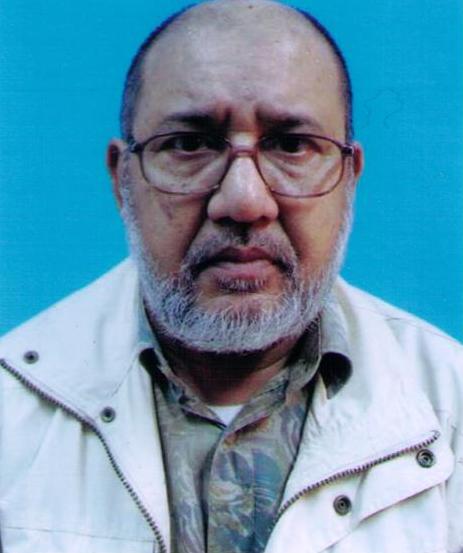
 This is a translation version of the original video documentary which was than transcribed and translated from Bengali to English. A book with the title of History of Bangladeshis in Greater Manchester has been published and it will be distributed to the libraries, schools and universities. The interview took place on 30th July 2009, so information about his personal family information may have been changed.
8.14 Alhaj Mohammed Dilwar Khan
 8.14.1 Life in Bangladesh:
Alhaj Mohammed Dilwar Khan was born in 1942 in the village of Joinpur, Sylhet Bangladesh. His father’s name is Md. Sultan Khan and he was a sub inspector of the Police. His work place was in the Sylhet Police Lane, Gulapgonj and Bianibazar, Sylhet. Since 1956 his father was serving as a Police Inspector in different police stations in Comilla. Thereafter, while working in Bamparampur station he was retired.
He has six sisters and 7 brothers, amongst them he is the eldest son. His 3 brothers are step – brothers and they are all living in America. One of his sisters lives in Britain and the other 5 sisters live in Bangladesh. Also 2 of his brothers live in Britain.
He has completed primary education from “Lauai Primary School” then he went to south “Surma High School” then “Raja GC High School”. Then he went to “Nasirnogor High School” in Comilla. Since 1958 to 1962 he studied at “Nasirnogor High School” and then he was admitted to “Rosomoy High School” in Sylhet and in 1963 he did a S.S.C exam from “Rosomo High School” but he didn’t know his result because he had to come to Britain. After the exam he came to Britain and he didn’t a get chance to found out his result. He changes schools because his father used to work in different places.
In 1960 when he completed class 8 educations from high school and was getting ready for class 9 he had gotten married. At that time no one was in Britain from his family but his wife’s elder brothers were in Britain. Through his wife’s family he came to Britain and he was thinking that he is the eldest son in the family and he has the responsibility to maintain his siblings. From that he came to Britain.
8.14.2. Journey to the UK & Immigration:
In 1963, he came to Britain with an “Employment Voucher”. At that time they used to call them a “Labour Voucher”. There was an Employment Exchange Office in Zindabazar, Sylhet, he collected a form from there and he filled the form and sent it to the Ministry of Labour in Britain. In the form it was mentioned that he will receive a reply within 42 days.
So he told his local post man that if there is any reply from Britain then let him know as soon as possible. Then he got a reply on time and he believes that he will get a voucher to go Britain. On the letter, it was mentioned that within 1 month he will get a call letter and then he needs to go to British High Commission in Dhaka with the passport to get the main voucher. After that he received the call letter and then after 3-4 days delay he got his passport then he went to BHC, Dhaka to get his main voucher.
For his ticket it costs him 2 thousand taka and his father paid for it. By airplane from Sylhet he went to Dhaka, and then to Karachi, then after 1 week of staying in Karachi on 9th July 1963 he came to Heathrow airport local time at 9 am. His relatives did not come to receive him at the Heathrow airport because Mr. Ali did not get a chance to let them know that he was in Karachi for 1 week.
At that time the air fare was 2,000.00 rupees and his father bear the cost. He flew from Dhaka to Karachi and stayed in Pakistan for a week and then flew to London Heathrow. On 9th July 1963 he arrived at London Heathrow. He could not communicate with his relatives and tell them that there is flight delay in Pakistan and therefore none of his relatives went to the airport to receive him.
There was another person at the same flight who was living in Britain. He discussed this matter and needed assistant from this person to sort out his travel arrangement. The person then told him he is going to Birmingham but he did not have enough money with him to pay for extra cost. Then he said “Don’t worry about money, I will pay the money for going to Birmingham”. Then with 10 shillings they came to Victoria by bus.
Then went to Euston, where his wife’s eldest brother lives. Then he got some money from his brother-in-law’s wife and paid the taxi driver for escorting them there and also given some to the man who helped him get there.
He had £5.00 in his hand, which he brought from Bangladesh. At that time, it was not allowed to bring much currency from Bangladesh. That was the first time he came to a different country. When he arrived at the London Heathrow he was surprised to see that all the people were wearing ties, including the people who were sorting the trolleys out. He also said “It does not matter what kind of job they are doing, the main thing is that they need a job”.
8.14.3 Life in the UK:
He studied in Bangladesh but he had problems with speaking in English when he first came to Britain. He didn’t have experience in speaking in English but he knew how to speak a little and always found it difficult to remember.
He did not face any problems with his English at his work places. For example when he used to work in the tailor factory he didn’t have to speak much English and there was a person from Bangladesh who was his colleague who used to work there, he didn’t have to face any problems with English.
People who had migrated to England from Bangladesh didn’t really have much education due to them travelling to Britain. Mr. Khan used to write letters to their families and relatives in Bangladesh to help out; also he used to read letters that they have received from their family and relatives in Bangladesh. He also used to fill up forms for example tax forms. From that he got a chance to help the community.
He didn’t have any problems with the food. He was attached with British food. For example eggs and chips or bread and butter. He really likes Britain’s culture. He said “If I didn’t come to Britain then I am not able to say whether it would be better or worse living in Bangladesh”.
But one thing he said very clearly “if I didn’t come to Britain then my children’s education might not of been as good as their studies in Britain”. All Bangladeshi parents encourage their children to do study. Then he said “it is good that we came to Britain, a better place to live”.
The People from Bangladesh who came to Britain have been benefited in many ways and the British has been benefited too. They are making a contribution socially and economically. He said many things have developed and people are well developed too.
He said “20/30 years ago the British society was very different than the present one; many things have been improved and developed”. The standard of life had been improved, the communication has become easier. The young generation is enjoying the benefit from the science and technology also.
8.14.4 Employment & Business:
When he first came to Britain he wondered how he was going to spend his time. He worried about this because the people he knew were all busy with their work. For the first few weeks he didn’t find any jobs and he stayed at home. He said “what kind of country is this, how I am going to spend my time and where can I find a job”.
For the first six weeks, he did not find any jobs. Then he found a job in London and he started his first job in Britain in a tailoring shop. They used to make ladies coats liner, as a learner he did 2 weeks training and then he learnt how to do the work. After deducting the tax he used to get £5.00 and 5 shillings wages per week. Then he moved to another tailoring factory in London E1 area and his weekly wages were £8.00. He worked there for 5 months.
During the work in that factory he had stomach pains so he had to take 2 weeks sick leave. After that he did not go to the factory again and he was looking for another job. Then he found another job in a tailoring factory. He worked there for a long time and his wages were £18.00 per week.
His next tailoring job was in North London and he moved to West London and worked as an attendant boy with “Royal Automobile Club (RAC)”. That was a big company. Only members of the club were allowed to go inside the company. His wages were £10.00 per week but he used to get more tips, including tips he used to get £18.00 to £20.00 wages per week.
At that time one of his friends from the same village used to work in a Restaurant. With this reference, he was able to have accommodation in the staff quarter with the other staff and he used pay £1.00 for a single bed and £1.00 for the food. Altogether, he paid £2.00 for food and accommodation.
He used to look for jobs by himself and he did not ask for anybody’s help. After 2 years working in (RAC) his wife came to Britain (1965). He moved to east London, where his brother-in-law was residing. He stayed with them for about six months then he applied for a flat. He was able to get a one bedroom flat with one reception room. The toilet was outside the house.
In 1980, he came to Manchester to open a restaurant business with his wife’s brother’s son and his sister’s husband. His sister husband used to live in Oldham, Manchester. The name of the Restaurant was “Akash Tandoori “and it was situated in Manchester Stalybridge area. The restaurant had a 64 seating capacity and they paid £25,000.00 for it. The majority of this fund came from a loan.
He had no previous experience in working or running an Indian restaurant but he relied upon on his brother-in-law, who had the experience in this field. His brother-in-law was a good waiter, so he managed the business and at the same time they had to appoint a chef to do the cooking. The Business was good, they used to make 2-4 thousands pound per week. Some weeks they used to make less money and sometimes they used to make more money. They used to do very well.
They used to pay £75.00 wages then they used to have £50.00 – £100 from the profit. He said every week the restaurant business used to be up and down. Starting of the business they used to live in top floor of the restaurant then they moved to the next door house (number 13).
He was involved with the business from 1980 to 2000. In 1997 he had heart bypass surgery; also he had a few health issues. Since then he has been retired from the business after 20 years. The other reason to quit from the restaurant business was his sons did not have any interest to do restaurant business.
8.14.5 Housing:
When he was single he used to live in a shred accommodation. When his wife came to Britain, they stayed for the first sixth month with their relatives in East London area. Then he applied for a flat and found a 1 bedroom flat including 1 living room and 1 kitchen but they did not have a bathroom inside the flat because during that time they used to have bathrooms outside the house. He did not have to pay rent when he was in his wife’s brother’s house but in a Council house they used to pay £1.00 and half a crown.
He bought a house in 1990 and that is where he is living at the moment. He bought the house for 50 thousand pounds and he spent extra to put a radiator inside the house, also the toilet and the bath are attached to the house. There was a 3 bedroom house in London from the Council attached toilet bath and other facilities.
8.14.6 Social & Family:
When he came to Britain, he left 3 sons in Bangladesh but they all died. At the moment he has 5 children in Britain and his eldest daughter and 2 sons are all highly educated and his youngest 2 sons are studying. After he came to Britain he did not get many chances to go to Bangladesh.
In 1972 he went to Bangladesh after the liberation war of Bangladesh. During that time he stayed in Bangladesh for 10 months, and then he came back to Britain in 1973.
In 1984 he went to Bangladesh for a second time, and then in 1985 again he went to Bangladesh because his father died.
Then in 2007-2008 he went to Bangladesh on holiday to see his relatives. At the moment he has 1 brother and sisters living in Bangladesh. He has 1 sister in Britain.
He used to write lot of letters, everyday he used to write 5-6 letters. He used to write these letters to his father, mother, wife and other relatives. He now doesn’t write them anymore, he hasn’t written one for 10 years.
During that time they used to communicate with each other by letters. At the moment communication has improved a lot in Britain and in Bangladesh. Now we have telephones, mobiles and the internet at anytime, anyone can contact their family and relatives in any country, which makes life a lot easier.
The Personal life was hard when his wife and children did not come to Britain. After work it was really hard to do cooking and other stuff which would have been easy if his family was in Britain. He said now the kind of life he has was not like the one he had before.
8.14.7 Conclusion
He is an established person in Britain at the moment and he is on pension. During his free time he does personal things and he goes to the Mosque to do Zuhr prayer. Sometimes he has hospital appointments. He has been the Chairman of the “Ashton Jameh Mosque” since 2002 and is still serving the committee and helping the Bangladeshi community. He was not officially involved with the “Ashton Bangladesh Welfare Association” but his younger brother was involved officially.
He said that during the rest of his life he wants to pray and fasts. He prays to Allah that he stays well in health and he can go to the Mosque and pray 5 times a day. Also he prays to Allah that he helps him from having any problems and he does not want to stay at home with ill health. Then he said “it is good that I came to Britain, my children are well educated”. He does not know much English but his children help him. He said “all the parents in Britain should take care of their children and give them a proper education”. For the rest of his life he does not want to settle in Bangladesh he wants to remain in Britain.