
 This is a translation version of the original video documentary which was than transcribed and translated from Bengali to English. A book with the title of History of Bangladeshis in Greater Manchester has been published and it will be distributed to the libraries, schools and universities. The interview took place on 12 January 2008, so information about his personal family information may have been changed.
8.24 Alhaj Shah Husiar Ullah
8.24.1 Life in Bangladesh: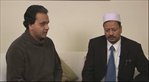
Alhaj Shah Husiar Ullah was born in 1955, in the village of North Dhormoda, Bishwanath, Sylhet, Bangladesh. His father’s name is Alhaj Shah Latib Ullah. In 1960, he started primary education nearby his village known as Muhammedpur. At that time there was a pundit teacher whose name was Sifoth Ali pundit.
Two years later, he went to “Bishwanath Primary School. After he finished studying in primary school in 1966, he went to “Lalabazar High School”. There was a school in Bishwanath called “Ramsundor High School” but he chosen to go to “Lalabazar High School” due to his friends studying there.
When he was studying in class nine, the liberation movement had begun in 1969. There were public demonstrations and often the school was closed due to strikes. Since then he had gotten involved with the student politics and it was impossible for him to study.
His father was a business man selling rice & crops. From his father’s income from the paddy field and business; the family was well maintained. His father had a partnership grocery business with his brother-in-law, where he was used to do part time help.
At that time, all goods used to cost less (reasonable prices). The people were very happy and enjoyed their life. For example, at that time the daily wages for a Person (labour) was one Rupee or one and quarter Rupee.
8.24.2 Journey to the UK & Immigration:
In 1958, his uncle came to UK and in 1961 his father followed. Prior to arrival to his uncle and father; his grandfather and grandfather’s three brothers worked in a British board ship. So, he was aware about Britain through his family members.
In 1970 his father went back to Bangladesh and decided to bring his family to the UK. In the same year he and his mother and two brothers came to the UK. He was only 15 years old at that time. His uncle and his father used to live in Bradford. He lived in Bradford for six weeks.
He really wanted to go to school and his father took him to school to get a place there but the school refused to accept him as a student and advised him to go for employment rather than education due to his age.
8.24.3 Employment:
There were plenty of jobs in the factories but he first started work in a restaurant as a trainee waiter at the “Dilkush Restaurant” in Oldham. He used to get £7.00 a week but a headwaiter would get £10.00 and the chef would get £12.00. After he worked there for about two months, he got a job in the factory and he used to get £18.00 per week.
After working in the factory for two years he became a supervisor. He was in charge of supervising 40 people. The workers used to bring food with them and there was a Canteen facility in the work place.
There were people from English, West Indian, African, and Bangladeshi & Pakistani who used to work there. The factory had a friendly atmosphere between the staff but because of the Pakistan – Bangladesh war, there was some trouble with other Pakistani colleagues. He worked there till 1975 and then he went back to Bangladesh with his parents.
In 1984 he became a business partner at the “Kismot Restaurant” at Burry New Road. He paid £4,000.00 for a quarter partnerships. His cousins’ brother was also involved with this business. He had run this business for about 3 years. He started his own takeaway with £17,000.00. He had run this business for about 12 years. Before he started his restaurant business, he used to have a partnership in a takeaway. His first takeaway did not earn enough money; there was a loss of £7000 due to fate.
He was involved in more businesses which included takeaways and a clothe shop. So he did lots of businesses within this field of trade. Meanwhile there were two more takeaways and one clothes shop. He has 7-8 houses which are on rent. Since he came to UK he bought 15 houses and set up 14 businesses. Now he has two takeaway businesses, one of them is managed by his brother.
He also has land & property in Bishwanath, Sylhet, Bangladesh. In 1991, he started a community centre in Bangladesh and he owns a house in Bishwanath. Back home his cousin’s look after all the businesses and properties. He said “I have got a plan to do “Agriculture Farm” in his village.
8.24.4 Housing:
His uncle and aunty were living in Oldham and his family decided to settle there. It was the month of November; the weather was very cold with foggy skies and heavy snow. In 1979 He brought his wife to Britain and resided in Oldham town in his father house. This house was purchase by his father in 1971.
He bought a first house with £700 at Belmont Street in Oldham. The house consisted of two bedrooms. There was no central heating but there was a coal heating facility. The bath was inside the house with a hot water facility but the WC was outside. 15 years ago he sold it for £30,000. Since he came to UK, he bought 15 houses and now he has got 7-8 houses which are on rent.
In 1975 he had seen a lot of changes in Britain. The housing has been modernising with gas heaters and central heating system. The climate has been changed too.
8.24.5 Social & Family:
He was a football fan and was busy playing football and lived there for 22 months. His father then tried to get him married but he did not agree until 1976. He got married in Jalalpur, Sylhet. In 1979 He brought his wife to Britain and resided in Oldham town in his father house.
He frequently visits them to check up his business & properties. His youngest brothers’ youngest son goes with him to Bangladesh every year. He has planned to do a agriculture firm in his village.
In 1996 he went to do Umrah Hajj and in 2005 he went to pilgrimage (Hajj) to Makkah with his whole family. He is happily married and he has 3 sons and 4 daughters. The oldest son was married and he has two children. The oldest son has studied in Britain and is working for a company. His two daughters got married. All other children are studying.
He has been involved with the Bangladeshi community in Oldham. Oldham Bangladesh Association was formed on 17th July 1970. Since then, he has been involved with the Association and serving as a cultural secretary. He is also involved with Oldham Bangladesh Cultural Group and he was a secretary.
He is also involved with the local Mosque and many other social and cultural organisations. He regularly donates money to help the poor people in Bangladesh. He is involved with Bangladesh politics.
He has kept contact with all his family back at home and takes care of them by giving them money. He recalls that there was a Bangla newspaper called “Janomot”, he was a reader of this newspaper.
8.24.6 Independence of Bangladesh:
When he was student of class nine, the liberation movement had just begun in 1969. There were public demonstrations and often the school was closed due to strikes. Since then he has been involved with the student politics.
He can still remember the politics of Pakistan (East & West conflict). He clearly remembers Fatima Jinnah and Ayub Khan’s election. Ayub Khan managed to get hold of some UP members and some other corrupt people gave them money in order to do the Campaign for his party. Ayub Khan then later gave a speech that if Fatima Jinnah wins the election then the country will be in chaos and public will be liable to pay tax. After Ayub Khan’s campaign was drawing to an end he ended up winning the election.
After the public movement in 1969, in 1970 Sheik Mujibur Rahman was released from jail. He remembered seeing Mujibur Rahman and he shook his hand and went with him to Lalabazar, where a public meeting was held.
He said, Sheik Mijibur Rahman raised the issue of deprivation by the West Pakistan government. More particularly the goods were cheaper in West Pakistan than East Pakistan. He said “there were many things such as sugar, tea, rice, paper and jute used to produced in East Pakistan but the selling price was higher than West Pakistan”.
He said “the government of Pakistan treated East Pakistani people differently and the people have realised that they have been deprived by the authority”. There were no investment in the East but in the West, which was very clear discrimination with the nation, he added.
In 1970, there was a cyclone, natural disaster in Bangladesh and lots of houses were destroyed and many people had been died. The people heard it on television & radio and everyone started to sympathise about the disaster. He said “It was very sad that the West Pakistan government didn’t visit East Pakistan and Bangladeshi people residing in the UK became upset”.
Bangladeshi people started to think about the separation of Pakistan and become an independent country. The people started to give support to the national leader for the independence movement. There were meetings and demonstrations for the support of the independence. In 1971, East Pakistan became independent and now the country is called Bangladesh and the British Bangladeshi people became very happy.
8.24.7 Conclusion:
He always wanted to be a successful businessman. He actively engages in politics and always helps poor people in Bangladesh. He has visited many historical places in the UK and has visited the Taj Mahal & Khaja Moinuddin Chisti in India, Dubai, Saudi Arabia and so on.
He thinks that young Bangladeshis have made progress in studying, employment & business. He also hopes that it not far away to become a parliament member from the Bangladeshi community.
In 1988, he got his British citizenship but he still has compassion for Bangladesh. He is well established in the UK and he is very happy to see his children have made progress in the UK. It may not be possible to achieve all of these, if he had to stay in Bangladesh. He thanked Allah for this.
He is working towards developing the Bangladeshi community. In Britain he has a strong position and is happy with his family and achievements throughout his lifetime.