
 This is a translation version of the original video documentary which was than transcribed and translated from Bengali to English. A book with the title of History of Bangladeshis in Greater Manchester has been published and it will be distributed to the libraries, schools and universities. The interview took place on 12 May 2008, so information about his personal family information may have been changed.
8.32 Alhaj Surab Ali
8.32.1 Life in Bangladesh: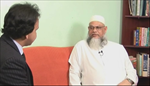
Alhaj Surab Ali he was born in 1936 in the village of Doshghor Nowagaon, Bishwanath. His father’s name is Mr. Alhaj Mafij Ali. He has two brothers and one sister and amongst them he is the oldest. His father owned 28.80 Acres of cultivated land and he lived in England. He went to “Doshghor Primary School” and went to “Ramsundor High School” in Bishwanath. He studied up to class seven.
8.32.2 Journey to the UK & Immigration:
In 1959 his wish was to come to UK, so his father gave him a factory voucher. As soon as he received the “Voucher” he went to the “Sylhet Passport Office” to apply for his Passport. One of his friends helped him to fill out his form after he got the passport; he arranged everything including the flights. The cost of ticket was 2,200 Rupees; his father paid all the expense for him to come to the UK.
The date was confirmed for him to come to the UK, his uncle took him to the “Sylhet Train Station” and said goodbye to him. He was travelling by train from Sylhet to Dhaka and flew from Dhaka to London Heathrow. At the time, there was another man who had same flight, he is known as Mubarak Ali, they both were from the same village.
In 1963, Surab Ali arrived in England and he was only 23 years old at that time. He used to live in England before so it was easier for him fly to England with someone who knows that country already. So from Heathrow they went to Victoria and then they passed through Manchester and from there they got a bus and came to Haslingden to his father.
8.32.3 Life in the UK:
They all used to eat together. They used to buy live chickens from farm and slaughter them to make it into halal. There was a grocery shop in Rochdale and they used have lamb meat and vegetables at this shop. At the time vegetables were available at English Markets but there were no Bangladeshi vegetables available. He remembers how he used to cook and he said “he used to cook Mondays and Wednesdays and eat the same food for a whole week”.
He said “we did not have any bath facilities, due to this I used to have a bath every Saturday in the public baths”. At the time, he had a toilet inside his house but there wasn’t any central heating system to warm his house. There were no carpets inside the house, but the floors were covered with liner instead.
8.32.4 Employment:
Since his arrival to the UK, two days later his father got him a job in the same factory where he was working. The factory was known as “Brian Fabric’s Printers Limited”. He used to work there 8pm till 8am and he used to work overtime on Saturdays and Sundays from 8am till 6pm.
After deducting the tax he used to get £22.00 – £23.00 every week. He used to get half an hour to eat at night and he used get his lunch from his house and he used warm it up at the factory.
There was a Bangladeshi man who was In charge of the factory, so he didn’t have any problems with communication. There were 200 people working in that factory and 30 of them were Bangladeshis and some English women used to work there as well.
He described his first experience of working in the factory and he said in the first night he destroyed many of the fabrics due to him being new to the job. In the first two nights he learnt how to do the job properly and then he didn’t have any problems. His main job was to insert the cloth from one side of the machine and it used to come out of the other side of the machine. He worked in that factory for about 2 years and then went back to Bangladesh.
In 1966, he worked two weeks at “East Enders Cotton Mill” in Rochdale and then went to “Manor Mill” in Oldham. He used to do nightshift from 10pm till 6am and he used do 4 hours overtime on Saturday and used to get £22.00 every week.
After working there for 6 months, he went back to at “Marsh Mill” at Rochdale and he was doing the night shift. He used to start at 8pm till 7.15am and even in this mill he used do 4 hours overtime on every Saturday. And he used get £28.00 every week. He worked in the factory for 16 years. He worked in the “Aero Cotton Mill” in Rochdale for about 8 years and did overtime; the wages were £160.00 – £200.00 per week.
He was able to set up a restaurant, it was known as the “Everest Restaurant” in Rochdale. There were 3 partners involved with the business and they all paid £30,000. The capacity of the restaurant had 70 seats and they used to do make £2,000.00 every week, but afterwards it went down to them making £1500.00 – £1600.00 every week. After running the business for 15 years, they sold the restaurant.
8.32.5 Housing:
At that time he used share the house, he used to live with some other Bangladeshis people and he used pay £1.00 every week for his seat. At that time, there were 8 people who used to share a house between them.
In 1967, he bought a house with a partnership with his cousin and they both paid £150.00 each and paid £300.00 in total. In 1976, he bought the other half from his cousin. In 1982, he spent £38,000.00 and done the extension of his house. After the improvement work, the accommodation now consisted of 5 bedrooms and 2 reception rooms, 2 dining rooms and 2 store rooms.
8.32.6 Social & Family:
In 1965 he had gotten married in Bangladesh and stayed there for 6 months, he then left his wife in Bangladesh and came back to England (1966). In 1986 he brought his two daughters, two sons and his wife to the UK. At that time his older son had completed his SSC in Bangladesh. On his own opinion, he thinks that many Bangladeshi people started to bring their families since 1976.
When he first came to Rochdale, there were 27 Bangladeshi people residing in Rochdale and only one person had his family with him and everyone else was on their own. In 1971 he became a British citizen and he learnt so many things by living in Britain. During the war with Pakistan, they used have arguments with Pakistanis regarding the independence movement.
He went to Bangladesh 16 times and twice he took his wife with him but the other times he went alone. He went to Bangladesh recently to see his 95 years old mother. Since he came to UK, he worked all the time and in 1989 he retired from work due to his ill health.
He is the father of 2 sons and 3 daughters. All his children’s are in the UK and they are all married. He said “I took the advantage, since I came to Britain, and my children have been educated in the UK, if I would not of come, then it would not turned out the same”.
Since the formation of “Bangladesh Association” in Rochdale, he was involved with the Association. The Associations main aim was to employ someone, to provide help and assistance the local people by reading and writing letters and also filling out forms. This project work was over well warming and other communities were benefited from this project.
At present, the “Bangladesh Association” is running a “Bangla School” on every weekend. There are also provision for elderly people; 2 days for men and 1 day for women. He said “I am religious person and went to Makkah with my wife to do pilgrimage (Hajj). He is enjoying a happy life with his family.
8.32.7 First in the Town:
From his best knowledge, he confirmed that “Haris Miah” was the first Bangladeshi who came to Rochdale to live and the first restaurant was called the “Kohinoor Restaurant”, the owner was “Dr. Khadir” and the second restaurant was known as the “Omar Kaiyum Restaurant”. In 1966, there was tailoring shop owned by “Keramot Ali”. They used to make cardigans, coats and English clothes. There was a grocery shop owned by “Abdul Karim Chowdhury” and he had Bengali food in his shop.
8.32.8 Independence of Bangladesh
In the past, there weren’t many Mosques in Rochdale and he had to pray in his house but at a later stage, a Mosque was built and it was known as the “Sonali Mosque”. At that time there were more Pakistani people who used to live in that area, so they have built this Mosque.
After the liberation war, Bangladeshi community built up a Mosque in Rochdale. Shiraj Miah initially helped them to buy a house in Rochdale and build a mosque there. There were about 30-35 people who could pray together. Afterwards the local MP Smith helped them to buy land from the council and they built up new Mosque. The Mosque has the capacity of more than 1000 people who could pray together.
8.32.9 Conclusion:
At that time, he was selected as a treasurer of the Mosque Committee and served there for 12 years. The Mosque has facilitated not only to do Salah but delivering Islamic teaching (Arabic) to the young people.
He said “I wish all the people have success and progress in life”.