
 This is a translation version of the original video documentary which was than transcribed and translated from Bengali to English. A book with the title of History of Bangladeshis in Greater Manchester has been published and it will be distributed to the libraries, schools and universities. The interview took place on 17 November 2007, so information about his personal family information may have been changed.
8.43 Abu Taher Md Mohiuddin Chowdhury MBE, JP, B.Com
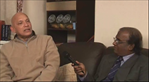 8.43.1 Life in Bangladesh: Abu Taher Mohammed Mohiuddin Chowdhury was born in 1942 in the village of Ghopal in Feni, Bangladesh. He comes from a landlord (Jomindar) family. They have had sufficient wealth/income to maintain their family comfortably.
Abu is number 2 of 5 brothers and studied up to class 3 from a village Primary school. He then moved to Karaiya High School under the supervision of his uncle and passed Matriculation (SSC), thereafter completed “Higher Secondary Certificate” (HSC) from “Feni College” and Bachelor of Commerce Degree from “Chittagong Commerce College”.
He used to like playing outdoor games and was elected Sports Secretary twice in his student days. He went to India several times to play football against Indian teams and found Indians very hospitable/friendly.
8.43.2 Journey to the UK & Immigration:
He had early ambitions to go to England for higher studies like his cousin and nephew. Luckily for him, just at the time his cousin returned from Britain after completion of his Engineering Degree. He guided Abu, to an easy route to enter Britain through “Chittagong Agrabad Employment Office” and completed the necessary forms to come to England. Within a few days Abu, received a priority Employment Voucher in Feb’ 1964 to go to Britain.
Unfortunately, he lost the Employment Voucher, and had to obtain a duplicate from the Dhaka British High Commission with the help from their HO in Karachi. At the start of his journey to Britain, he met an older person from Comilla, who was returning to Britain, who helped him a lot on his arrival in Birmingham.
8.43.3 Early Life in the UK
In 1964, most of the Bengali settlers were ex-seamen, either working in a factory or in self employment. Although there were a small number of educated professionals and semi professionals, they were not visible within the community. At the time, he found Bengalis very supportive to one another. Abu used to help them in many ways including reading/writing letters/filling official forms. These voluntary supports were immediately known in the community and he became very popular and had regular visitors on their days off from work. They used to address him as “Master Sahib” to show their mark of respect.
8.43.4 Employment & Achievements:
With the help of another Bengali named Yusuf he secured a job in the hospital. They called him for an interview. In the interview, Hospital Chief Administrator asked him to read a paragraph from his Daily Times and after hearing him read, he was offered a job to manage a Hospital store for a weekly wages were 12 pounds and 10 shillings. After few months Abu left the Hospital job to join an insurance company and began to study insurance at “Birmingham College of Commerce”.
After the start of war with India in the 1965, Abu left Insurance job and join United Bank Ltd. After 6 months Abu was promoted to the rank of manager of Manchester branch and opened other offices in the Gtr. Manchester. He worked for the Bank up to Dec’71 and resigned on 11.12.1971, just a week before Liberation of Bangladesh from Pakistan army occupation. After doing a few short term jobs, he joined as Manager to set up Janata Bank Birmingham/Bradford, thereafter he resigned to go to Bangladesh for long break.
On his return in 1973 he was looking for a new career and has received an offer to join DHSS/DWP towards the end of 1974 and joined Jan’75. In 1984 Abu was selected to become an Active Magistrate on the Manchester bench. While working as an Executive in DWP in 2001, Abu was honoured by the Queen with an MBE. Abu was the first Bangladeshi elected Councillor to serve Manchester City Council in 2004-11.
In 2005 he was selected as an Adviser to the Gtr. Manchester Police Authority (Race) and served them for 5 years including about 2 years as chair. In 2006, he decided to retire early from his full time job with the DWP to devote more time on his elected position as Councillor. Thereafter, in 2008 he was the first Bangladeshi to be elected as Governor of all Central Manchester Hospitals (CMFT) and currently serving his second term till 2013.
8.43.5 Social & Family:
He got married in 1963. His wife joined him in 1967 and is father of four Children and Grandfather to Five. His Children are well educated in Britain are in professional jobs. Abu is happy and proud about their achievements in education and careers.
During his life in Britain, he tried to be involved with many local leaders of the community both in Birmingham and in Manchester. Notably Mr Motin, Mr N Uddin, Mr M Rahman, Mr Kabir Ahmed and many others Bengali Community leaders in Gtr Manchester including many mature university students from Bangladesh.
In 1983, Abu became the Chairman of Gtr. Manchester Bangladesh Association and immediately started looking for a separate building or a permanent home for the association and managed to secure the present building in few weeks only with a direct grant from the local authority and set up “Bangladesh House” at 19a Birch Lane, Manchester.
This achievement was possible as they had unanimous tacit and open support from all in the community and Councillors from all political parties. It was primarily set up to coordinate all social, welfare, educational and training needs of all members of the community, centralised from one place so that it can be used as a resource centre to wider community and Local Council. He managed to set up foundation work for all men/women/children. After 9years he handed over his position to the newly elected committee to carry on and advance from here in 1991.
8.43.6 Independence of Bangladesh:
When the war had started in Bangladesh in 1971, they did a lot to advance the Bangladesh movement here. He used to attend all meetings and help the movement while remaining in the United Bank. All war activities were centralised in Manzil Restaurant. They used to have meetings initially before the war in the Shalimar restaurant in Manchester. He was in the meeting when they first decided and resolved to be called “East Pakistan (Bangladesh) Association” (1970). After the Awami league won the Election, Bhutto (West Pakistani leader) refused to hand power to a Bengali in the east, and put pressure on the army to start the military operation on the then East Pakistani and the War started in March 1971. We then got rid of the word ‘Pakistan’ from the name of our organisation and the whole liberation movement remained in Manzil restaurant and coordinated work to include all Bengalis from Greater Manchester.
8.43.7 Conclusion:
Abu said that our new generation Bangladeshis are in a good shape eg, in education, job, profession, sports, business and trainings etc. and hope that with their help and support, it could go forward from strength to strength in the future.
He came to Britain with no practical life skills but managed to maintain his discipline in personal, family and social life. He always believed in honesty and maintained integrity more than the accumulation of money. Politics was his hobby and has been so from his student days. He is really proud and happy about his life here and has always tried to help others and give his knowledge and experience back to the benefit of the people and society at large. Abu is hoping that future Bangladeshi new generation will give back something to society from their life skills.
At the moment he is living in Manchester with his family part of the year and the rest in Bangladesh. He has always maintained a generous helpful manner towards the whole community who come to seek his advice or help in all matters of their concern and still maintains an open door policy.