
 This is a translation version of the original video documentary which was than transcribed and translated from Bengali to English. A book with the title of History of Bangladeshis in Greater Manchester has been published and it will be distributed to the libraries, schools and universities. The interview took place on 29 March 2008, so information about his personal family information may have been changed.
8.46 Alhaj Sazzad Khan
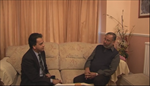 8.46.1 Life in Bangladesh: Alhaj Sazzad Khan is living in Manchester. He was born in 1940 in the village of Thilok, Jagannathpur, Sunamgonj. His father’s name is late Mosoddor Khan and his mother’s name is late Ayubun Nessa. He has three brothers and one sister; he is the third amongst all of his siblings. He completed his education from ‘East Tilokh Primary School’ and “Digolbag High School.
He then moved to Mirpur High School, then Tilokh Sarpara Shahjalal High School. He studied till class nine in high school and after that he migrated to the UK. He was more involved with sports; therefore he could not complete his education. One occasion, his eldest brother guided him to do further education but was not successful.
After leaving the School at class nine, he was unemployed for 2/3 years. Then he had taken the initiative to come to Britain. His father was not happy about this, so his father used to give him lecture about this. When his father was giving the warning, his eldest brother seen this situation and started crying.
8.46.2 Journey to the UK & Immigration:
In 1939, his father went to Singapore, at that time he was not even born. When his father returned to East Pakistan (Now Bangladesh) in 1948, he was eight years old and had seen his father for the first time.
His eldest brother did not tolerate that his brother was getting hard time due to being interested in sports. His mother used to say to his eldest brother that why don’t you go abroad, you could have taken him with you, then this situation could have been avoided. His eldest brother did not give any replies to his mother; he finished his vacation, and then went back to his work place.
After two weeks his brother returned to home with a Passport. At that time, the year was 1961. His eldest brother obtained a visa and came to Britain. His eldest brother’s main intention was to bring his younger brother to the UK.
His eldest brother came to know that all the people coming through Karachi to the UK. He came to the UK on 22nd February 1962. The visa was processed from the British High Commission in Karachi, Pakistan. He received a letter from the Karachi British High Commission and in this letter it was mentioned that he should contact Glove Travels based at (Jinnah Avenue now it is call Bongobondu Avenue), Dhaka, Bangladesh.
He went to this place and just given his passport size photograph. Three days later, he received another letter and he made the arrangement to leave Bangladesh for the first time. He went to Dhaka by train and met the official at the Glove Travels. They arranged the flight and he flew from Dhaka to Karachi, Pakistan.
In Karachi, he stayed for one night and the next day he flew from there to London Heathrow by KLM airlines. There were 5/6 Bangladeshi people travelling with him. When he arrived in Karachi, he had seen his Passport for the first time. Before that no one received any passports in his group.
The authority called the name and handed the Passport just one day before the flight. The flight and tickets cost £350.00 paid by his eldest brother. Asgar Khan and Afruj Miah helped his eldest brother to do the visa processing.
After arriving at the London Heathrow Airport, he had seen a gentleman with a list in his hand and waiting for their arrival. He was an agent of Afruj Miah. Afruj Miah sent this agent to receive these passengers, who arrived in the London Heathrow Airport. There were about seven people in their group. They arranged two cars and went to Birmingham.
They did not have any destination address and was not able to show the taxi driver about the address. They were just able to understand that the Taxi driver was saying, “We arrived in Birmingham and whereabouts in Birmingham you want to go”. One of them had his relatives address and shown this address to the Taxi driver and he dropped all of them off at that address.
Accept one person, all of them felt uncomforted due to the fact that they are not being welcomed by the other Bangladeshi people residing there. Then they asked all the Bangladeshis “do you know Afruj Miah and where does he live”. The people replied “We know Afruj Miah very well but does not know where about he lives”. Then he asked a question “whether anyone of them knows Kazi Mozommil Ali”. One person replied, and said “I know him and I will take you down there”. On that he did, he took us to Kazi Mozommil Miah’s house in Birmingham.
When they arrived there, Kazi Mozommil Ali wanted to know who they are and where they came from. He was the relative of Kazi Mozommil Ali but they never met before. When Mozommil Ali came to know that he is relative of Ali, he embraced him. Then Kazi Mozommil Ali phoned Afruj Miah and he came to pick them up from his house.
All of them arrived at Afruj Miah’s house and had their meals. He found so many relatives and he embraced them all. On the next day he went out with Afruj Miah in his office. Afruj Miah received a phone call from Sazzad Khan’s brother; he was sitting there and was able to recognise his brother’s voice. He did ask permission from the staff and had spoken to his brother.
His brother was surprised to know that he had arrived in the UK, without informing him by letter or by any means. His brother also said he was worried about him to know whether he would be able to come to Britain. Then his brother said to him, “anyway at last you have arrived and now I am free from tension”.
Then Afruj Miah took him to the train station and purchased a ticket for Bradford, where his brother was residing. When he arrived in his brother house, he stayed there for three months and did not do any employment.
8.46.3 Employment & Business:
Then, one of his relative from Burry came to see him and his brother in Bradford. They had a conversation about employment and his relative was saying if he goes with him, then he would be able to find employment for him. He convinced his brother and went with him. He had a meal with his relative, and then his relative told him that he could go to sleep as he is going to work and it would be quite late when he will return.
He was quite surprised to hear this from his relative and he was thinking how he could stay on his own in the house. He told his relative that he is not able to stay on his own and he said “I will go back today”. His relative replied to him and said “if you want to go now but you may not be able to find the bus for Bradford, because it was quite late evening”.
Then his relative had no choice but to take him to the bus station. He took a bus from Burry and arrived in Rochdale and from there he took another bus to Halifax. When he arrived in Halifax he did not find any bus for Bradford. He was in a very difficult situation and was thinking the only alternative transport is to catch a taxi, but it will cost him a fortune and his brother will have to pay this but it would not be wise decision.
At that time a Police arrived there and asked him “why you are standing here and where do you want to go”? He replied to the Police that he missed the bus for Bradford and now thinking what to do. The police then asked him whether he had enough money in his pocket, then Police can call a taxi for him. He said “no I did not have enough money to pay for the Taxi”.
Police officer took him to one of the Asian houses and asked him to knock the door. He knocked the door for quite few times. No reply and no one came out or open the door. Then Police officer told him, “Do not knock the door anymore, as everyone is working people and might be sleeping”.
Then a white man arrived there, the Police officer had a conversation with this man and convinced him to stay with him tonight. So, in the morning he would be able to catch a bus in the morning. He accepted his advice and stayed with him for a night. In the morning when he woke up, he given a heartfelt thanks to the gentlemen who provided the accommodation and left the house.
Finally he arrived to his brother’s house. His brother used to work in the cotton factory. About two weeks later, his relative arrived again to visit their house in Bradford. They discussed about the employment and accommodation. Then he came to Burry again for the second time and started job in the cotton factory.
A few days later he found accommodation owned by Pakistani and moved there. He lived there for few days and found a Bangladeshi house and moved there. His wages were £6.00 to £7.00 and he worked there for about a year. He used to pay £1.00 for accommodation and £2.00/£3.00 for the food. He was very careful when spending money, as he was thinking to save some money.
He thought that his brother spent £350.00 for his travelling and visa processing cost. He said he is quite sure that he must have borrowed some money from someone in order to pay this amount and he needs to pay this back. He was thinking on saving to pay back to his brother.
At that time the life was really hard. He had seen many people working hard in Great Britain, which he did not see before. He said working in the cotton mill was not that hard, the management used to give training. Once or twice they used to show that how people can handle the machine and the worker was able to learn very quickly.
He used to take packed lunches he made from home and used to eat this at lunch time. After finishing his job, he used to wash his face and hands and take his evening meals at home. There was no boiler for the hot water; he used to use the kettle to boil the water. The toilet was outside in the back yard. When there was bad weather then it was very difficult to use the outside toilet. Two /three people used to cook together to make their evening meals.
He used to have his breakfast in the morning and used to take 2/3 pieces of toasted bread with butter for his lunch. There was a canteen but halal food was not available therefore Bangladeshi and Pakistani people used to take a packed lunch from their Homes. Eight nine months later he went to the canteen and seen there some food such as Beans, Mash Potatoes, Chips etc which are halal and can be eaten. Since then he used to go to the canteen instead of taking his lunch.
A few days later he left this factory job and took a job in the restaurant. Then he left the restaurant job and went to Halifax and he worked in a carpet factory.
In 1965, he moved to Rochdale and searched for employment. He found a job with the Turner Brothers. There were about 2,500 Pakistani and only 3 Bangladeshi people who used to work there. The weekly wages were £13.00 to £14.00. He worked there until 1967. In 1967, he went to Bangladesh and he got married there. He stayed in Bangladesh for one and a half years in the area called Shibgonj, Sylhet.
In June 1968, he returned to the UK. At that time, his brother was employed at the Wilkinson Glass Factory Limited in St Helens. His brother’s weekly wages were £35.00. His brother felt that working in the UK is very hard as he was employed by the government of Bangladesh and he was planning to go back to Bangladesh.
In 1969, his brother returned to Bangladesh. His brother was planning to take 5 trucks with him. At that the procedure was to obtain permission from the Pakistani Government. His brother made several enquiries and found that it was impossible to take the trucks with him.
In 1970, there was problem caused by a group skin headed people in the St. Helens area. This group was very aggressive and used to attacked black people on the street. Therefore, for this reason he left the job and moved to Birmingham and found employment in the engineering workshop.
In 1974, he started a business under the provision of the wage earner scheme facilitated by the Bangladesh Government. He was involved with three other people and imported 40,000 Tons of salt. Their unit was raided by the authorities and the salt was crooked. He made a loss in this business.
8.46.4 Social & Family:
In 1975, he brought his wife to the UK. At that time he was living in Oldham, therefore he was involved with the Bangladesh Welfare Association.
In 1978, he moved to Manchester and worked at the Aligor Restaurant. The owner of the Aligor Restaurant was Mannan Miah; he was a treasurer of the Mosque Committee. Through Mannan Miah, Sazzad Khan became involved with the community work.
In 1980, there was the first election held to elect committee members amongst 372 members. In 1994, he was elected as a treasurer of the Shahjalal Mosque in Manchester. Then in 2000, and 2004 he was elected as a chairman in the Mosque Committee. He was actively involved with the Greater Manchester Bangladesh Association – GMBA.
His first daughter died one month after she was born. He is the father of three daughters and two sons. His eldest son is involved with Property Business, his two daughters are working in the Job Centre, one daughter is employed as an IT Instructor and one son is in University.
About 8-9 years ago, he retired from work. Most of his spare time was dedicated towards community work. More specifically, he spent much of his time for the improvement of the Shahjalal Mosque in Manchester. His contribution will be remembered by the Bangladeshi community in Manchester.
He said all of his children have obtained better qualifications, most of them have gotten married and are staying in Manchester. He has 5 grandchildren and he gives some times to play with them. He regularly travels to Bangladesh to see his brother’s family.
8.46.5 Independence of Bangladesh:
When the six point movement of independence started, he followed the events very closely. At that time a student named Asad was injured by the bullet, this news was covered by the Bengali newspaper call “Janamot”. He was involved by raising funds for this student for his medical treatment.
He was very hopeful as Ayub Khan stepped down from power, and Yahya Khan came and declared the election schedule. He said “the BBC and Janomot was the main source of information and news.
He mentioned that on September 1970, there was news in the Guardian newspaper that the Awamileague will get the majority of seats in the parliament but Sheilkh Mujibur Rahman would not be able to become the Prime Minister of Pakistan and get the power from the Pakistani authority, the reporter doubted.
In 1971, Farid Gazi’s brother Ashraf Gazi came to Birmingham for a visit and to see Mr. Khan. Mr. Gazi told him about the election of Pakistan is over and president of Pakistan called an assembly on 3rd March 1971 at Dhaka, East Pakistan. The visitor guest proposed him go to East Pakistan to see all the political leaders.
On 22nd February 1971, he went to Bangladesh. Whilst he was in the aeroplane, he met a navy official and he asked a question “how many Bengali armies personal are employed by the Pakistani authority”. He replied less than 10%.
His trip was wasted due to the cancellation order made by the Pakistani authority and the first seating of the parliament did not go ahead. Thereafter, opposition party called for the non-cooperation movement. He decided to take part in the demonstrations in support of independence of Bangladesh. On 25th March 1971 the West Pakistan military attacked the East Pakistan.
In April 1971, the Pakistani military attacked the village market known as “Fesir Bazar”. They distorted houses and killed many people in that area. He had seen this operation and realised that staying in the house is not safe and he might be killed. He decided to become a freedom fighter to resist the Pakistani army’s atrocities in his village. He contacted his cousin brother and decided to go to India.
He left the home with his cousin and some other people and went to “Karimgonj” (a village close to India) and found a hotel where other leaders were staying including the local MP “Rois Uddin Advocate” but unfortunately, he did not get an opportunity to get involved with the Bangladesh Liberation Force (Mukti Bahini). He eventually he had no choice but to return home.
He then went to Chelar Bazar with his cousin and some other people. In there they met a local businessman called Deb Das. Deb Das organised a meeting with the local residence, who wished to go to India for their safety. In that meeting a Cornell from the Indian army was present to give the support to the local people.
The Army Officer then informed the public that he did not get an order from the Indian Government, until than he is not able to give permission to the Bangladeshi people to enter the Indian Territory. He was disappointed from the meeting and had no choice again but to return home, as he thought, by force, no one can do anything.
Later on, with the help from the “Farid Gazi”, he was able to obtain a membership to join the Bangladesh Liberation Force (Mukti Bahini) and had received a border security pass to go to India for training. Thereafter, along with others he went to “Megaloy Sector” to join the force. The Sector commander was “Mir Showkot Ali”. They were welcomed by the sector commander and he asked them to bring more people with them and they would be able to join the Force.
They had to return home, in order to find some more people who were interested in getting involved in liberating the country from the Pakistani military. As a result of their hard work, they were able to recruit 31 people from their village area and made an arrangement to go to India.
The 31 people divided into 5 groups, there were six people in each group and they begun their journey from Chattak to Chelar Bazar. At that time it was raining and 18 of the people with the help from the villagers went to a house. They had given some money on behalf of the group to arrange food for these people and villagers had organised the rest. They had their meals and went to sleep.
In the morning, they have seen their hands had been tighten with rope and their house had been captured by the Pakistani Army. He was caught up in the turmoil of the War of Independence. He said one of the local chairmen from the area of Betura was the informer of this group. Many people were planning to escape from there by hiding but he told all of them it would not be possible, therefore, they needed to stay in one group.
He also said “I have had three cousins with me; I am not going to leave them alone and run away with you”. Then they had been arrested by the Pakistani military and were taken to Chattak Cement Factory for house arrest. Amongst them there was one person, who was the son of Abdur Rouf (School Teacher).
The school teacher had this confirmation that his son had been arrested by the Pakistani military. At that time the manager of Chattak Cement Factory was a Bihari man. He had influences with the Army and he was a good man. The manager recognised the son of school teacher.
There was a police officer from local police station known as Siddikur Rahman. The Police Officer recognised him and he regretted for what had seen. The Police Officer told him, “I am very sorry, but please tell the truth, as the truth will eventually win”. The Police Officer had been given the authority to record individuals’ statements.
He told the half truth and half lied to the Police Officer. The first question was, when the Pakistani Military was attacked in Sylhet town, whether he was involved with the Bangladeshi Liberation Force. He admitted his involvement with the BLF. With the help from the manager of Chattak Cement Factory, a request had been put forward to the Pakistani Military Officer (Cornell) for their release. The manager also told the Army Officer that whoever had been arrested in the middle of the war, they had been killed and it has been damaging the image of the Pakistani Army.
They had been taken to the local Police Station by the Police Officer. At that time the Police Officer spoken to a new appointed Officer-in-Charge (OC) and arranged some food for them to eat. The Officer-in-charged told the people that they should pray to Allah (God) for their life and he also said to them that he had no authority to release them.
On the next day, they were relocated to the “Sylhet Cadet College” by truck. Brigadier “Iftekhar Ahmed Rana” made this order. At that time one army officer was saying to another that you did not have the bullets and why you brought these people here. Thereafter, they had been locked up in a room in the “Sylhet Cadet College”.
On the next day, 2/3 people’s names were called at a time and all of them had been interviewed by Army Officers. When he entered the room for the interview he had been offered orange juice and a bed to seat by a Major. He was waiting for the last moment of his life, as he thought he is going to die. So he decided to take some rest and to drink some juice.
He was then called for interview in another room. There was one Major, one Cornell and a Captain in that room. He told them, he lives in UK and shown some evidence. They were pleased to see these papers, he said.
Then, they asked him a question, “from UK, how much money did you donated to the Political Party known as the Awami league”. He replied “I did not make any contribution and did not find the opportunity to donate any money to the Political Party Fund”. He informed the officer that in one occasion, he raised some money for an injured student Asad for his treatment during anti Ayub movement.
Then, they asked a second question, “You are a resident of UK, why you want to go to India ?”. The third question was whether or not he supports the Political Party known as Awami league. He admitted that he is the supporter of “Awami League”. Fourth question was “why you support the Awami League”. He replied that the “Awami League” was demanding the interests of the Bangladeshi people.
Fifth question was “have you seen the manifesto of Awami League, they did not mention anywhere the name of Bangladesh – now they have declared”. He replied to the Army Officers that he is bound to give support to the Party as he has seen many innocent people being killed in his village by the Pakistani Army; the houses had been destroyed. He also said “I could be killed like many other people; therefore I want to go to India and have some training, so I can save my life.
Then they asked the sixth question, “Do you know who belongs to the party in your area”. He told the army officer those he knows were MLA Haque and Rois Uddin MP. They told him, they know about them and they asked him again “are there any other people who are involved with the Awami League?” He replied to the Army Officers and told them he just got back in February 1971 and everyone is supporting Awami League, how many names he would be able to tell.
Thereafter, he was locked up in a toilet. He found a part of the cigarette was left in the toilet. He was just going to pick up the cigarette at that time but then an Army Officer (Cornell) seen that he was picking up the cigarette. The Cornell asked him “Do you smoke”. He replied “I do but I do not have any Match box”. The Cornell did not say anything to him but left the area. Few minutes later, the Cornell came up with a packet of Star cigarettes and gave it to him.
He was not afraid of death and didn’t know why, all of the 18 people were kept in the same room, they discussed the situation and decided that if they were going kill, then they will chant “Joi Bangla” (victory to Bangladesh) as the last word of their life.
He had been taken again to Cornell’s room and they told him “We have enough information from you and I am trying to release all of you, but I need more co-operations from you”. The Cornell also told him that we are trying to proof that if we had to arrest anyone, we did not like to kill them. The Cornell also told him that if they win the war “the members of the Peace Committee will be in danger”.
He also helped many other colleagues and other people, who were in their custody by providing interpreting. He was shocked to see that many people were tortured by the Pakistani Army and instead of asking water, he asked for cigarettes.
He also said, some Bangladeshi people supported the Pakistani Army to carry out much killing of innocent people. Those groups were known as Al- Sams, Al- Badar and Razakar. He also said the people who were killed, did not affiliated with any political party or neither of them were a member of the liberation force (Mukti Bahini).
Therefore, still now, he hates those people, who carried out the many killings and co-operated with the Pakistani Army. He had seen these people, who betrayed the nation by co-operated with the Pakistani Army.
He said “when someone was being tortured by the Pakistanis, they had to come to me and many of them told me `you are the one son of Bengali and you can save us”.
Thereafter, the Army Officer, made up their minds and told them that many of them are students, if they go back to School and College, then they will be released. All of them also needed to sign a blank deed for security purposes and they had to agree with them that no one will go to India.
The Cornell told him that he will send an Army Officer to inform them that all of them are alive and that the Army Officer will bring all of your parents and guardians. The guardians are also required to give assurance that their children will not go to India. Then your release will be quicker.
He replied to the Cornell and said that when your Army Officer will arrive at their house, their parents will leave the house, they will hide themselves anywhere to save their life. So, the Army Officer would be able to find anyone in the house. Instead of sending the Army Officer, he advised to send a Bengali Police officer in their house, and then they would be able to meet with the officer.
The Cornell then said to him “I am a Muslim and you are Muslim too, but if I kill you I do not have to give the reasons to anyone, do you understand”. The Cornell then said to him “As a Muslim I am promising you that I will not shoot you but you need to tell me that you must have some relatives in your town”.
He was puzzled with this statement made by the Cornell and he was thinking what he can do or what he should not do and which one is the better option. He was determined that he was going to die, anyway but considered the proposal made by the Cornell. He was thinking about helping the Cornell and willingly he disclosed the information that his brother-in-law was working in the office as a clerk.
By that time two people already had been killed amongst the eighteen people by the Pakistani Military. On the next day, they brought the entire guardian from the remaining sixteen at the Sylhet Circuit House. A Brigadier and Syed Ali Advocate were there. The brigadier told them, “You will be released on the condition that, you will take admission in colleges again and Mr Khan will remain in the town”. Syed Ali Advocate made the objection; he said “If you release all of them, they will become stronger”. He also said in Jagannathpur the Bangladeshi flags are flying.
While they were in prison, in one night, the Pakistani army 6 or 7 in numbers wanted to charge bayonet on them. They had struggled for their life. They thought Pakistani army might have been planning to kill them that night. But suddenly, Major Salim entered the room and ordered them to halt. He then ordered them to get out of the room, and ordered the sentry not to allow anybody, without his permission.
When he was caught it was May 1971 and detained by the Pakistani army for six month. In September 1971, President of Pakistan Ahiya Khan declared a general amnesty to prisoners’ war, who was arrested during the war. After few days later they released from prison.
After the liberation war, he returned to UK and started a cloth shop in Oldham. After that he joined with the Turner Brothers. He used to work and run the business at the same time.
8.46.6 Conclusion:
He was asked to give us a reflection about his life between 1962 to 2009. He said his first intention was to settle in Bangladesh but considering the social economic condition of Bangladesh wasn’t good, he thought it would be better after the liberation. He does not think that he has achieved his goals. He said “I think Bangladesh is my mother, I was born in Bangladesh, and I am very much attached to my mother, soil and the country”.
He very sadly said “when the first generation people will pass away, the second generation is not going to learn Bangla”. He is worried that the culture might get lost by the next generation or future generation to come.
He said with emotion that his children did not learn Bangla, due to the fact that they are all in the UK. He did not think it would happen to his family. Similarly there are thousands of children who will be disconnected from the Bangla language like his children.
He is appealing to these people, to take care of their children, otherwise the nation and country will be affected by them. He also insists that the Bangladeshi community should do more cultural practice and encouraged them to get involved in British Politics. The community also needs to take care for their children to make sure they have a better education, so that they would have a better life in the future.
He said “I cannot leave my family, all the children and live in Bangladesh on my own. Therefore, I have decided to stay with them for rest of my life”.