
 This is a translation version of the original video documentary which was than transcribed and translated from Bengali to English. A book with the title of History of Bangladeshis in Greater Manchester has been published and it will be distributed to the libraries, schools and universities. The interview took place on 11 April 2010, so information about his personal family information may have been changed.
8.49 Alhaj Makhon Miah
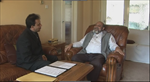 8.49.1 Life in Bangladesh: Alhaj Makhon Miah was born in 1952 in the village of Att Para, Bishwanath, Sylhet. His father’s name is late Alhaj Monuhor Ali and his mother’s name is late Arobun Nessa .
He has four brothers and two sisters. One sister remains in Bangladesh and rest of them are in the UK. He went to “Habra Bazar Primary School” and studied at “Ramsudar High School” in Biswanath.
8.49.2 Journey to the UK & Immigration:
In 1966, he came to Britain at the age of 14 years old. He came to Britain with a boy voucher. At that time he was a student at high school in class seven.
He stayed at 9 Forth Street in Walsall, West Midlands. He said “after 18th Months when he was born, most probably in 1954, his father went to Singapore”. His father worked there for about 7-8 years, after that his father came to UK. In 1964 his father went to Bangladesh, he was only 12 years old. He went to the high school and studied there for two years.
8.49.3 Life in the UK:
The new generation British – Bangladeshis are getting the right education and have gotten used to the advanced life in the UK. However, the old generation have worked hard to bring their families in the UK. The generation are far more advanced than the older generation.
8.49.4 Employment & Business:
In the UK, he started his part time employment at the “Royal Bengal Restaurant” in Walsall. The owner of the restaurant was called Shamsu Miah and he was from Vadeshor in Sylhet. He Worked there as a part time employee just at the weekend, he used to get £2.00 just as pocket money.
When he was able to do some work in the restaurant then the days of work had been increased to three days; Friday – Sunday and wages were £5.00. He was able to become a waiter in few days time and he worked there till 1970. In 1970, he worked in another restaurant in Lichfield. That employment was the last job of his life.
In 1971, he became a business partner with Abdul Aziz Nunu Miah and opened a restaurant in Chester known as the “Asia Restaurant”. He invested £9,000.00 in the business. He said he had some savings and the rest of the money was borrowed from his relatives. He was working as a Manager/waiter and his partner MA Aziz Nunu Miah worked as a chef.
They worked hard right from the beginning and were able to improve the business. They did not think about the wages at the beginning as their main aim was to pay the loan money, which he borrowed initially to improve the business. They were able to meet the aim. They ran this business for a long time.
He was able to establish another restaurant in Preston. He took another two partners before opening the second venture. The name of the restaurant was the “Asha Restaurant”. This business was successful because his partner Majid Miah was a very good chef and the other partner Moklisur Rahman was a good waiter.
Then he opened a third restaurant in Darwin, known as the “Anondo Restaurant”. They had taken another partner to run this business. This business was profitable too but due to his personal problems he had to come out from the partnership.
He was a brave young boy who came from Bangladesh, with no previous business experience but he was able to setup businesses in the UK. He said, “If anyone needs to successful in setting up businesses then obviously you have to work hard and take extra care to the business.”
He is still involved with the restaurant business at Brook Street, Chester and his children are running the business. Now it is time for retirement he said and he is insisting his children to take full responsibility to run the business.
His eldest son, after completing his “A levels” got involved with him to run the business. His second son completed his degree and is working in a Bank. Now he is showing the interest to get involved with business. His two daughters are married and three of them are still in education.
There used to be good training for the chef in the past. One to one training, one chef used to create another chef. The new generation businessman needs to look at these early chefs as a role model and consider this training issue seriously. Otherwise the catering trade is going to suffer. He also said, “The community leaders need to look into the issue and take necessary steps in order to develop the Bangladeshi community in the UK”.
During his working life, he never faced discrimination but he had some experience of dealing with bad customers, whilst he was involved with the business.
8.49.5 Housing:
He bought a three bedroom semi-detached house in Chester. He paid £45,000.00 for this house. He was able to buy another house in the same area, and paid £100,000.00 for this. Later on, he sold these houses and purchased another 5 bedroom house in the same area where he is residing now. He paid £150,000.00 for this house.
8.49.6 Social & Family:
His first intention for coming to Britain was to earn some money and support the family in Bangladesh. Also he said “I was thinking to earn and save some money and then go back to Bangladesh” but considering the reality and for social reasons, he had to change his mind.
In 1974, he went back to Bangladesh for the first time. In 1977, he went again and got married. He brought his family to the UK in 1978 and he is the father of two sons and five daughters.
Whilst he was living in Walsall area, he used to go to the public bath. He used to visit friends and relatives, when he had a day off from work. At that time there were not many families who came to Britain. He used to share the accommodation and food with other people.
Now days, the majority of the people have got their families in the UK. It has improved the life style, compared with the 1960’s and mid 1970’s. There is lack of time due to the family commitments, the people cannot move around like they used to do in the past.
One of his sisters is residing in Bangladesh; he goes to Bangladesh to her family and other relatives and friends. In 2008, he performed his Hajj (pilgrimage to Makkah). He had the ambition that he will spend his retirement life in Bangladesh but he is unable to do so due to his family being in the UK.
Now all of his family members are residing with him in the UK. He wishes his children to have a better education and to have a peaceful life in the UK. In considering the religious education, they have been working towards developing the old Mosque and creating the facility to do five times prayer and Islamic studies.
He taken the initiative to facilitate a mother tongue (Bangla) class, but was unable to do so for some reasons. He said the parents are not taking interest to send their children to the Bangla School. But he is hopeful, that maybe in the future the young generation will take some interest in learning their mother tongue.
When he moved to Chester, he was serving as a chairman for the Chester Welfare Society for many years. He said “Chester Welfare Society” is still active and he attends many events organised by the Society. While he was serving the CWS, he tried to encourage the local councillors; MPs to take part in many of the activities and events.
He said, “I used to support the Awamileague but one instant he supported the BNP MP candidate from Biswanath & Balagonj”. As he thought that BNP MP M Elias Ali would be able to do the development work in this area.
There was a public reception party held in Manchester, where President “Ziaur Rahman” was going to attend but he could not attend this meeting due to his personal problem.
He liked to do socialising; in doing so he enjoyed and liked to attend in any social gathering. He said while he was living in “West Midlands” area, he was a member of the Birmingham “Jubo Shongo” (youth organisation) and “Birmingham Action Committee”.
8.49.7 Independence of Bangladesh:
During the liberation war in 1971, he was in the UK. At that time he was not old enough to get involved with any activities but he can remember that many people were involved with the liberation movement in the UK. The people had given their emotional and moral support in the independence of Bangladesh.
In 1969, although he was young he still attended a meeting in Birmingham where Sheikh Mujibur Rahman delivered his speech. He met with him for the first time. He was convinced with the speech and he felt that the support should be given to the movement which he was the confident leader of at that time.
In that meeting one of the Pakistani men shouted and said “Sheikh Mujib is the agent of India”. Then other Bangladeshis requested that man to leave the hall, he was trying to interrupt the meeting. After listening to the Sheikh Mujib speech, he realised that people and the country’s interest are well connected. For example he said “Sheikh Mujibur Rahman told the audience that the paper produce in the East Pakistan and it goes to West Pakistan and returns to East Pakistan for selling with a higher price”.
Thereafter, the general election was held in Pakistan. Sheikh Mujib and his party had the majority of seats in the Parliament. Sheikh Mujib was arrested. He took part in a demonstration for the release of Sheikh Mujibur Rahman. At that time the Pakistani Cricket team came to Birmingham to play, he joined the demonstration and people shouted with slogans like “go away, go away, release Sheikh Mujib and recognise Bangladesh”. He had seen one person became very emotional and was throwing stones at the Pakistani Cricketers.
After the liberation war, when Bangladesh became an independent country, one of the ministers “Abdus Samad” came to Birmingham to attend a public reception party, along with the minister “Pir Habibur Rahman” he came as a companion of minister. He gave a lift to “Pir Habibur Rahman” from Heathrow to Birmingham. He seen that “Pir Habibur Rahman” was wearing the lungi and he asked him why he is wearing this. “Pir Habibur Rahman” replied by saying that the lungi is the national dress of Bangladesh and he prefers to wear the national dress as he loves Bangladesh.
He said that the minister of Bangladesh “Abdus Samad Azad” addressed the public meeting and he informed the audience that they are receiving recognition from many countries in the world and he is also hoping that all of countries will recognise Bangladesh as a new independent state.
At the time, when “Ziaur Rahman” was in the Power, Retired Army General “MAG Osmani” came to Chester and stayed in Chester for a week. General “MAG Osmani” also addressed a public meeting in Chester, where he attended. Community leader “Don Miah” chaired and “Abdul Matin” conducted the meeting.
There was a question raised from the public about the father of the nation, why some people are saying “Sheikh Mujibur Rahman” is the father of nation. General “MAG Osmani” replied to the audience that as far as he is concern he knows that “Sheikh Mujibur Rahman” is called “Bongobondu” (friend of Bangladesh) not the father of nation, the public will decide who the father of nation is. General “MAG Osmani” also said that “Sheikh Mujibur Rahman” was a good leader, who played a vital role in liberating the Bangladesh from Pakistan.
He left Bangladesh just a few weeks before the victory day. When he flew from Sylhet Airport, the military were there, he was afraid at that time that they could have been killed by the Pakistani Military. The messages were given by the Army officers to those people, who flew from Sylhet that they should tell the others on the arrivals that the condition of the country is safe and war has not affected the public.
8.49.8 Conclusion:
He also blames the Bangladeshi Politician’s for their insincere work. The Politician’s are often seen that they only think for themselves not for the country. He also said one party put a name, the other party change it. This is not called politics. If the leaders are working for the country and working for the people, then Bangladesh eventually will be developed like other countries in the world.
From his own experienced being an ex-chairman of the Chester Bangladeshi Welfare Society, he said people need to work together as they did in the past. The old and young generation needs to work together to achieve the goals of the community.