
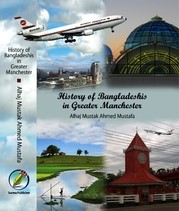
 This is a translation version of the original video documentary which was than transcribed and translated from Bengali to English. A book with the title of History of Bangladeshis in Greater Manchester has been published and it will be distributed to the libraries, schools and universities. The interview took place on 18 November 2007, so information about his personal family information may have been changed.
Alhaj Mohammad Azmal Khan
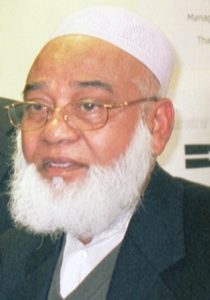
8.26.1 Life in Bangladesh: Alhaj Mohammad Ajmol Khan was born in 1939, in the village Doulothpur, Bishwanath. His father’s name is late Wajidul Haque Khan and his mother’s name is Nazmunnessa Khatun. He is the 3rd out of 4 brothers.
His father used to take him to the Mosque. His father used to say to him that this world is for limited time only and the reason I am taking you to the Mosque is because we are Muslims. As a Muslim we should follow our religion and we should pray five times a day. When he used to go home after Mosque, his mum used to ask him what have you learnt today. During his religious study he used to go to school as well.
He used to go to “Doulothpur Primary School”. He studied in that school for a few months, and then he went to his eldest sister’s house in Sylhet. His father thought that Sylhet School’s were much better than the village schools, his father sent him to a Sylhet School for better study.
He completed his primary education at “Khalpar Primary School”, and then he started his secondary education at “Lalabazar Junior High School”. During that time his father died, this caused him to stop studying. After 1 year his mother wanted him to study again. He started his secondary education from the same school “Lalabazar High School”.
In 1959 he passed the Secondary School Certificate (SSC). Then he studied in Sylhet M.C College. During that he found a job in the Chittagong Agrabad, He started work in Agrabad Air Aviation. Bangladesh is famous for agricultural work, most of the villagers used to do cultivation on the paddy fields and maintain themselves by selling crops. The income they received from the cultivation of paddy from the paddy fields was enough to maintain their families. At the time there were plenty of fishes in the ponds, small lakes, cannels and rivers; they used catch fish from there all the time.
There was no need to buy fish from the shop; there were plenty of fish that would be exported from India for them. There were varieties of fruit trees available in every house. When he used to go to school during a rainy day, he used to go to peoples house because of rain and they used to give him mangos etc.
During that time Muslims and Hindus were very friendly, Muslim people used to go to Hindus houses and they used to feel very happy and welcome. Even Muslim people used to invite Hindu people to their parties. He said on his eldest sisters’ wedding day Hindu people also came to the party. On the language movement day in 1952 he used to study in secondary school. That time he used to go to meetings etc. He said that time Muslim Hindu teachers were very good and they used to give good advice to the students for their future.

8.26.2 Journey to the UK & Immigration:
He prepared himself to come to the UK; a travel agent helped him to sort out everything. He started his journey from Narayongonj and then by streamer he came to Gualond. From there he came to Calcutta by train. In the Calcutta train station he met his cousins’ brother; His cousins’ brother lived in Calcutta.
When he said that he’s going to UK, his cousin’s brother wanted him to stay a few days in Calcutta which he agreed to do so. His cousin had taken him to a few places in Calcutta and he wanted him to stay in Calcutta on a permanent basis. He also said “why would you want to go to the cold country which is the UK?”
He didn’t want to stay in Calcutta. From Calcutta Airport he came to Tehran airport, there was a stoppage for 1 and a half hours, then he came to Britain through Paris. From Heathrow airport by train he went to his relative’s house in London. He stayed there for 3 days, and then he went to his eldest brother’s house in Blackburn.
8.26.3 Employment & Business:
The Landlords opened a new grocery shop called “Ever Green” and his first job was in that shop. Before that he was on benefits and he used to get 2.50 pound per week. From the shop he used to get 3 pound per week, he used to work from 9am to 10pm shifts within the shop. For halal food they used to get sheep’s from the farm and they used to slaughter the sheep. Every week they had to get 2 sheep for the shop, during that time things were cheap; the price of 4 Chickens was a pound, for a whole sheep it was 7-8 pound. He worked in that shop for 9 months.
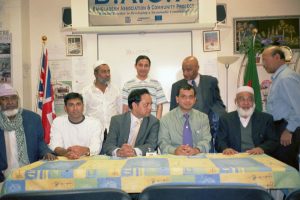
He found out about another job in a textile spinning mill from the newspaper, he went to the mill and he saw the rain water inside the mill. They asked him whether he would be able to bring some people and clear the rain water from the factory. He asked them that if they provide a pump to clear the water which they did have. Then he started to clear the water with the pump, with some other people. Within 3 to 4 days they cleared the water. They paid them for the job and also they gave him a job in the factory.
He used to work 8 hours a day and had a 30 minute lunch break. He used to get 5 pound per week. He worked for 1 and half years in that factory. During the work there was wool in the factory so they had to wear masks during work.
In 1963, he had a hoped that he would get better wages in Rochdale, so he moved there. He found a job in factory in Shaw area. In that factory there was a provision that helped him to learn how to use the machines. From this training, he learnt how to use a waiving machine. He used to get 9 pound per week. After that he went to the “John Bright Mill”. He worked there for 23 years.
About two and half thousand people used to work in 3 shifts. In Rochdale there were 7 mills from the same company. In 1979 he went to Bangladesh. In 1980 the mills and the factories started to close down. Also he was involved with a business during his work life in Britain. First he opened an Indian take away but he sold the take away and opened a clothes shop.
8.26.4 Housing:
The house where he resided in Blackburn consisted of 2 bedrooms, toilets and 1 bathroom within the house but there was no boiler, so they had to warm the water in the kettle for a shower etc. Also on the weekend they used to go to the public bath to have shower. They used to use Coal to warm the house.
While he was living in Haslingden, there were no Mosques to pray in; therefore he used to pray at home. There weren’t radiators around at that time; it was too cold so they used to use cold water or warm water from the kettle to wash their faces, hands etc for praying. On Friday they used to pray at home, for Eid prayer they used to book a hall. It was hard in those times due to the cold weather and the heavy snow.
For single bed they had to pay 1 pound, about 40 people used to live in one house. The landlord used to change the bed sheets once a week. He used to live with his brother and the Landlords were 4 Bangladeshis. In Rochdale where he used to stay there was not any hot water facilities, no central heating and the toilet was outside of the house. They used to warm water with a kettle. For a single bed he used to pay 1 pound and sharing the bed was 10 shillings. He used to cook food by himself.
When he was in Haslingden he used to know Rochdale very well. He used to live in a rented house, and then he bought a 4 bedrooms house for 300 pounds.
8.26.5 Social & Family:
In 1967 he went to Bangladesh and got married and 1976 his family came to Britain. He established himself in Britain and also his children were educated, he feels very happy and very proud.
During his life in Britain he was involved with the community. In 1962 he became a member of the “Haslingden Welfare Association”. They built a Mosque and he became a founder of the Mosque. He was the secretary of the “Haslingden Welfare Association” after he came to Rochdale.
When he came to Rochdale there was about 25-30 Bangladeshi people. Haji Mokbul’s brother used to own a Grocery shop on Drake Street, there was another shop on Yorkshire Street. When there was a Pakistan Welfare Association in Rochdale he was the Secretary General. A Few days later, he left his General Secretary position from the “Pakistan Welfare Association”.
He said “we thought we needed to organize `Bangladeshi Welfare Association` in Rochdale. In Rochdale they organized a public meeting to organize this. From Manchester the Bangladesh Association Chairmen MA Matin and the Pakistani High Commissioner Agar Shahi came to the meeting. It was his first visit to Rochdale.
After the meeting he proposed to establish a Bangladesh Association in Rochdale but MA Matin did not agree with the proposal and he stated that there is no need to establish the separate association and this can be done at a later stage.
In 1964, they open a new Mosque in Rochdale called (Sonali Mosque). He was involved with opening of the Mosque. After that he organized a meeting with the Bangladeshi people. The reason for this meeting was to establish a Bangladeshi Association. Mr. Koramoth Ali, Dr. Qadir, Abdul Motlib, Lala Miah, Wajib Ali, Gazi Monuhor Ali and more people attend the meeting. Before the Bangladesh victory he tried to organize a Bangladeshi Association.
In 1972 he came back from Bangladesh and found out that the local community in Rochdale organized a Bangladeshi Association & Community Project to provide support to the liberation war in 1971. Lala Miah, MA Goni, Mannan Talukdar, Shofiqe Mirza, Khuwaj Ali, Aiyubur Raja Chowdhury, Ator Miah Chowdhury, Abdul Roshid Master and many more people were involved in this committee.
After that they established an Islamic Centre. Through the election he became the Chairman of the Islamic Centre. Then it became a Mosque. They were able to set up a project and the local Government authorized the project and gave some funding. He worked there for 2 and half years.
When he was doing voluntary work in the weekend; he used to read & write letters, fill up tax forms and did other official work. People who came from Bangladesh usually struggled to speak English. On his days off he used to go to his friends and relatives houses.
In Britain it used to snow heavily. He said till 1976, there was heavy snow fall, when snowed it was too cold and it was really hard to walk on the road, it used to stick to their feet in the snow and it would hurt.
8.26.6 Independence of Bangladesh:
The liberation war started when the East Pakistani people were deprived and discriminated by the West Pakistani authority. When Sheikh Mujibur Rahman won the election, the West Pakistani people did not handover the power. The movement of independence then begun. East Pakistan (Bangladesh) was invaded by the West Pakistani Military and they killed 300,000 people. At that time, he was in Bangladesh and witnessed many incidents which had taken place in Sylhet during the war.

At the time of a general election, he actively participated in the election Campaign. He supported the movement and voted for the party, who won the election. During the war, one night the Pakistani military entered in their village, he had to escape by hiding somewhere safe and sound. At that time, one of his cousins and nephews were arrested by the Pakistani Military and was taken to the Bishwanath Police Station. With help from the local chairman, they were released later on.
One of his friend’s relatives used to work at the Bishwanath Police Station and he used to take passes from Officer in Charge (OC) and visit the Sylhet Town frequently. He witnessed the mass killing in the Shahjalal Mosque in Sylhet. He used to share information and give regular updates to all the Bangladeshi people living in Britain at that time.
Whilst he was staying in Bangladesh, during the liberation period, his passport had expired and he had to go to the British High Commission and wait for Dhaka to reply for entry clearance to come to the UK.
He said, with the hope and aspiration Bangladesh became independent but people still did not get the full benefit. He also said “if the British Bangladeshi people take some responsibility to develop the country, then it would be possible to see the benefits because the new generation British Bangladeshis have been educated in the UK and will be able to bring new changes in order to develop it even further.
He also said “the government of Bangladesh needs to take initiative to facilitate the new generation of the British Bangladeshi people to contribute their knowledge and skills in order to bring the changes for better. He believes that the young generation will take some interest to do this kind of development for any society.
He also made a comment that the people who are corrupt should be punished, then the country will make it progress.
8.26.7 Conclusion:
Alhaj Ajmol Khan is living in Rochdale but he loves his country very much. Also he said he would like to go to Bangladesh and stay there for long time, if the countries’ conditions get better.